
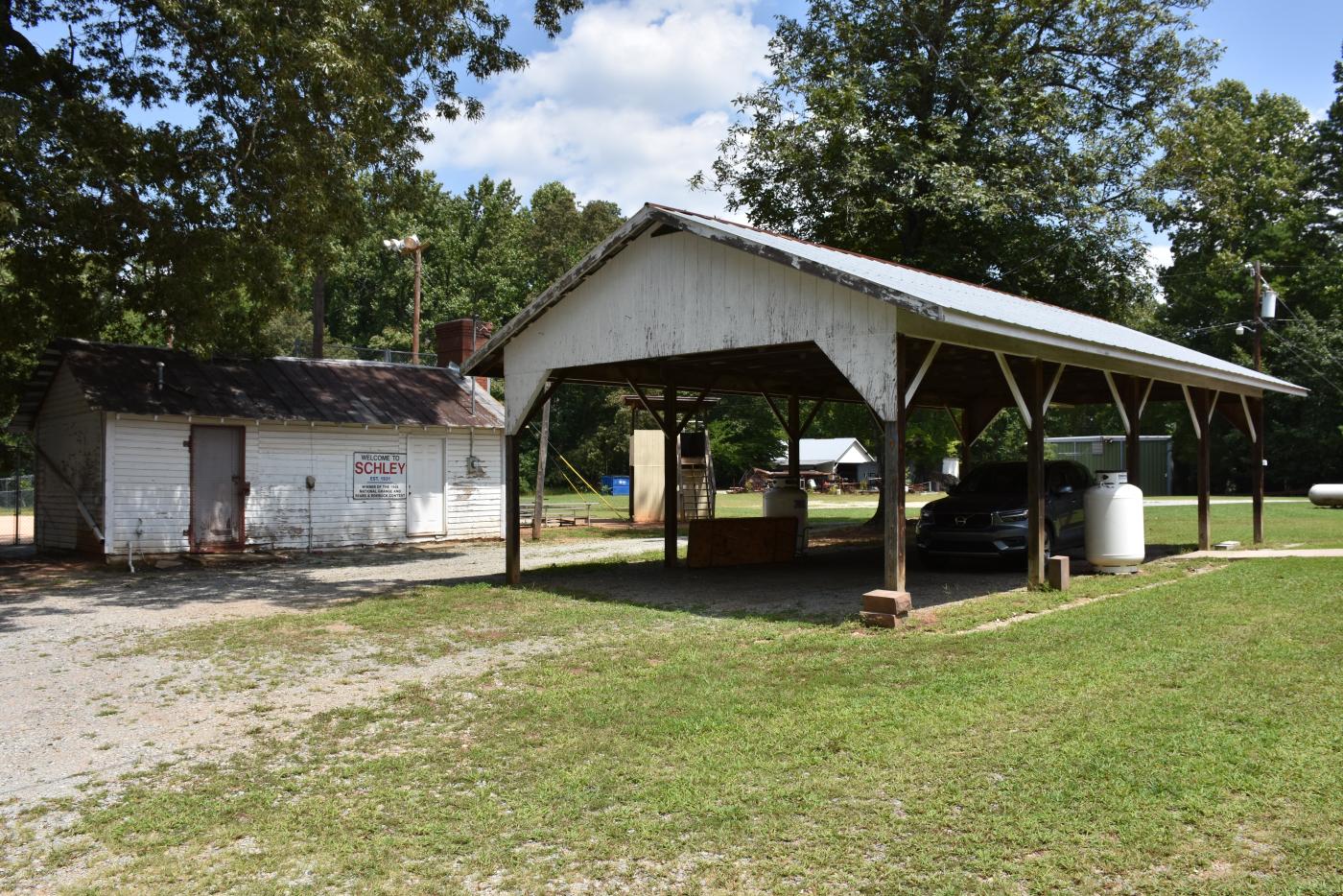
Celebrations of American Independence can be an occasion for summer food, including the much-celebrated local barbecue picnic. Through the statewide historic architectural survey program – which studies and documents the most humble of buildings and structures to the most monumental – it is worth knowing that the North Carolina Historic Preservation Office has even documented community barbecue buildings that have been used as a community gathering place and more practically where meat and other dishes are prepared for local gatherings, picnics and fundraisers.
Today, we can easily enjoy barbecue from numerous restaurants located across our state. But before the advent of the modern-day barbecue restaurant, however, annual community or church barbecues were day-long events that required many hands and brought people together just to “break bread” with each other. As many North Carolinians know, barbecue, both as a cuisine (including vegetarian dishes) and as an event, indeed brings us all together as people.
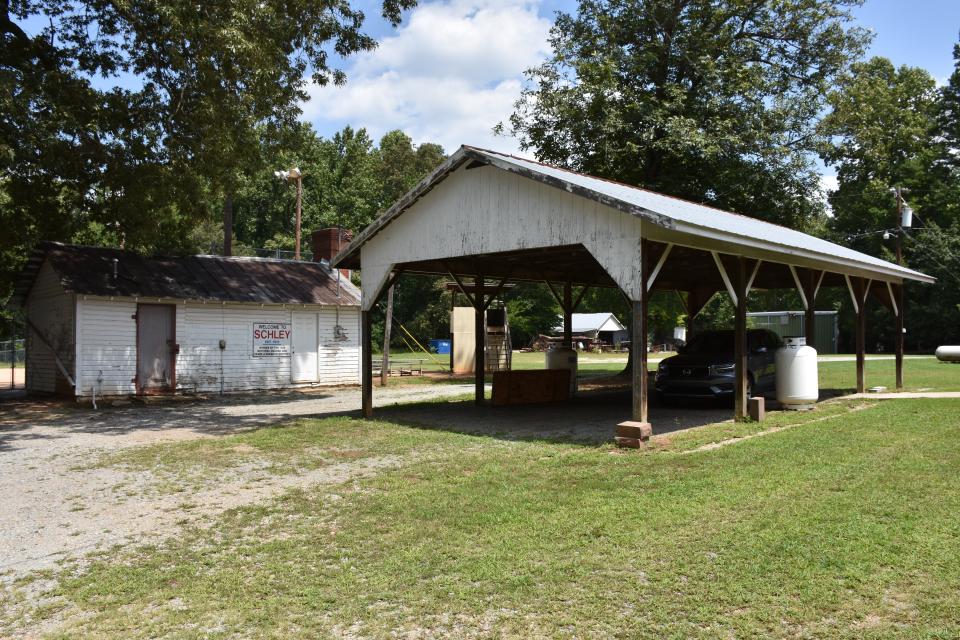
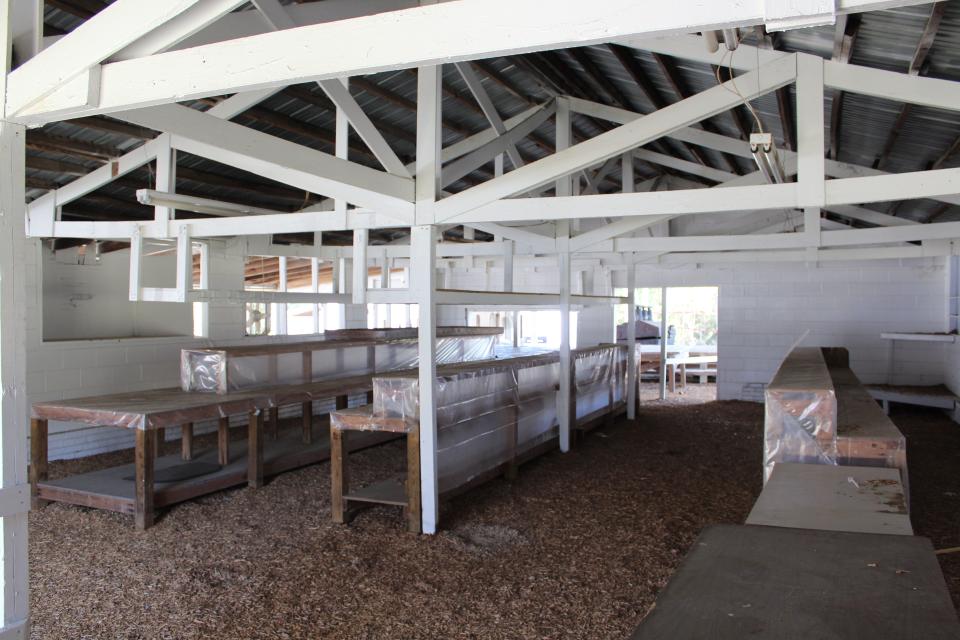
The community barbecue building type includes usually a shared kitchen, some sort of open flame grilling apparatus or pit location (sometimes integrated with the kitchen, sometimes not), food preparation areas, and outdoor shelter or pavilion. The kitchen and preparation areas could be open air with window screening to keep out insects.
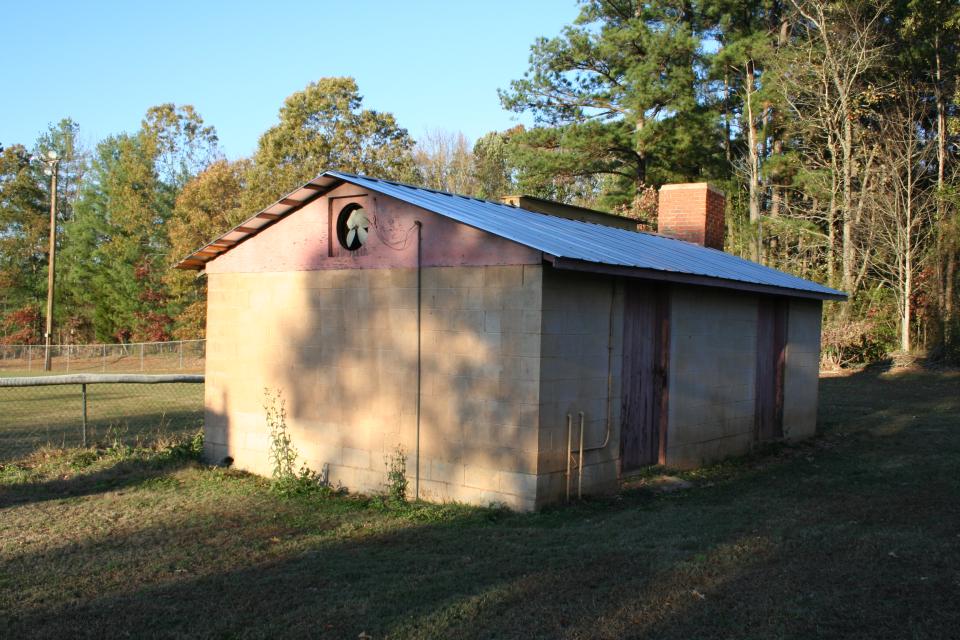
Some examples of community barbecue buildings we have identified in the field include (along with their North Carolina State Historic Preservation Office survey site numbers):
Mallard Creek Presbyterian Community House, near Huntersville, Mecklenburg County, (MK1308) — known as “the granddaddy of all barbecues” – retired its 93-year annual tradition in 2025.
Conetoe Community and Barbecue Buildings, Conetoe (pronounced “kuh-NEE-ta”), Edgecombe County (ED2099).
Longhurst Methodist Church, Roxboro, Person County (PR0664)
Bushy Fork Park, near Hurdle Mills, Person County (PR0570)
Schley Grange Hall, near Hillsborough, Orange County (OR3148)
The Architectural Survey program of the North Carolina State Historic Preservation Office has been active since the late 1960s as a result of the National Historic Preservation Act of 1966 and NC GS Section 121-8. The bedrock of preservation planning and actions, a thorough local historic survey forms the basis for many preservation activities in North Carolina. Survey reports, files, and maps are maintained as a permanent record with many long-term benefits: they permit evaluation of properties for nomination to the National Register of Historic Places; facilitate decision-making about the potential impact of government funded or licensed projects on historic properties; benefit protection of local districts and properties by local preservation commissions; and boost private investment in renovation and preservation of historic buildings for new uses. Over the years, architectural surveys in town after town and county after county have provided the first step toward preservation success stories – directing new attention to familiar sights and encouraging citizens to rescue long neglected buildings, rejuvenate traditional neighborhoods, and focus new investment in the economy and quality of life in historic communities statewide.
The Survey and National Register Branch of the State Historic Preservation Office is the repository for our state’s historic architectural survey records, and maintains files on an estimated 140,000 + historic buildings and structures. Our statewide Geographic Information System (GIS) known as HPOWEB is a publicly accessible map for the statewide architectural survey, and a digitization effort will be underway soon to convert our legacy paper files into digital versions for greater public accessibility so that the place-based stores of our state and its people can better be shared and understood.
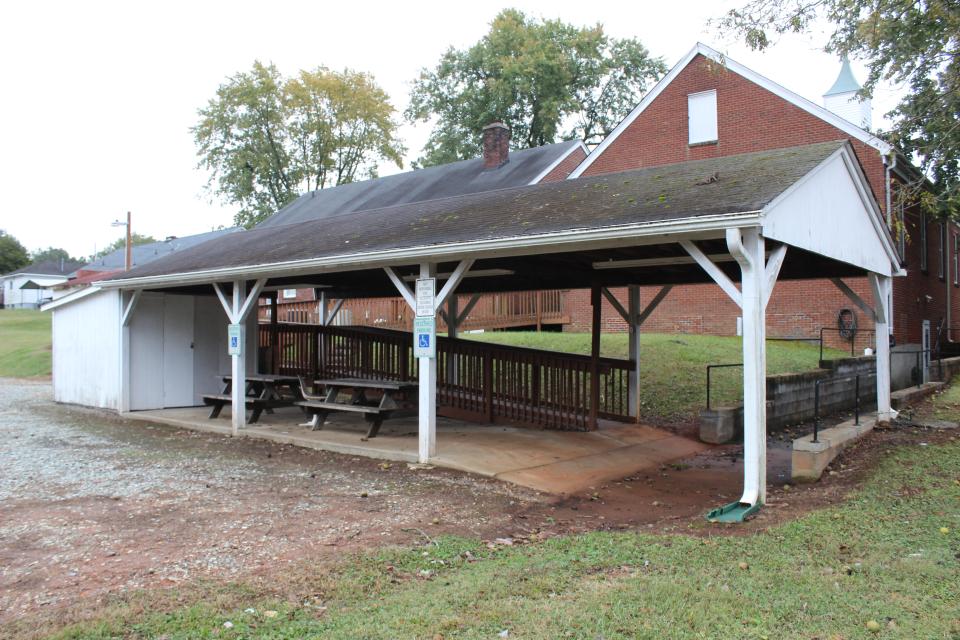
Photo credits – all from Survey and National Register Branch, North Carolina State Historic Preservation Office
Resources:
https://www.ncpedia.org/barbecueGraham, Nicholas. "Barbecue." NCpedia. Library of NC. 2010.
Barbecue Month (2019 DNCR blog post)
2023 Edgecombe County Architectural Survey Update Report (features Conetoe buildings)
Holy Smoke: The Big Book of North Carolina Barbecue by John Shelton Reed and Dale Volberg Reed (UNC Press, 2008).
Hog and Hominy: Soul Food from Africa to America by Frederick Douglas Opie
Thompson, Michael D. “‘Everything but the Squeal’: Pork as Culture in Eastern North Carolina.” The North Carolina Historical Review 82, no. 4 (2005): 464–98. http://www.jstor.org/stable/23523182.
The North Carolina Barbecue Society: http://www.ncbbqsociety.com/
A Taste of North Carolina Barbecue: Styles, History & New Twists (Visit NC page)
Slideshow from the NC State Archives Flickr site. https://www.flickr.com/photos/north-carolina-state-archives/sets/72157606179591876/