
Author: Alana Gomez
As we prepare for the 250th anniversary of the Declaration of Independence, we look to our revolutionary roots and seek answers to questions like “When Are We US?.” Stories that engage with the topics of freedom, civic responsibility, and the ideals of democracy help us commemorate our more than 250 years of history. The history of women’s suffrage in NC helps us understand how the war for a more just and equitable society continued even after the American Revolution.
The women’s suffrage movement in North Carolina began in 1894 with the formation of the Equal Suffrage Association in Asheville, led by Helen Morris Lewis. Lewis advocated for a constitutional amendment to grant women the right to vote. In 1897, Senator J. L. Hyatt of Yancey County introduced a women’s suffrage bill, but it moved to the Committee on Psychiatric Hospitals, where it died. The state’s women suffrage movement lay dormant for the next fifteen years. The movement revived in 1913 with the North Carolina Equal Suffrage League meeting in Charlotte. Many believed women’s contributions during World War I would sway President Wilson and congress to support suffrage. In 1919, U.S. congress approved the 19th Amendment for the state ratification process.
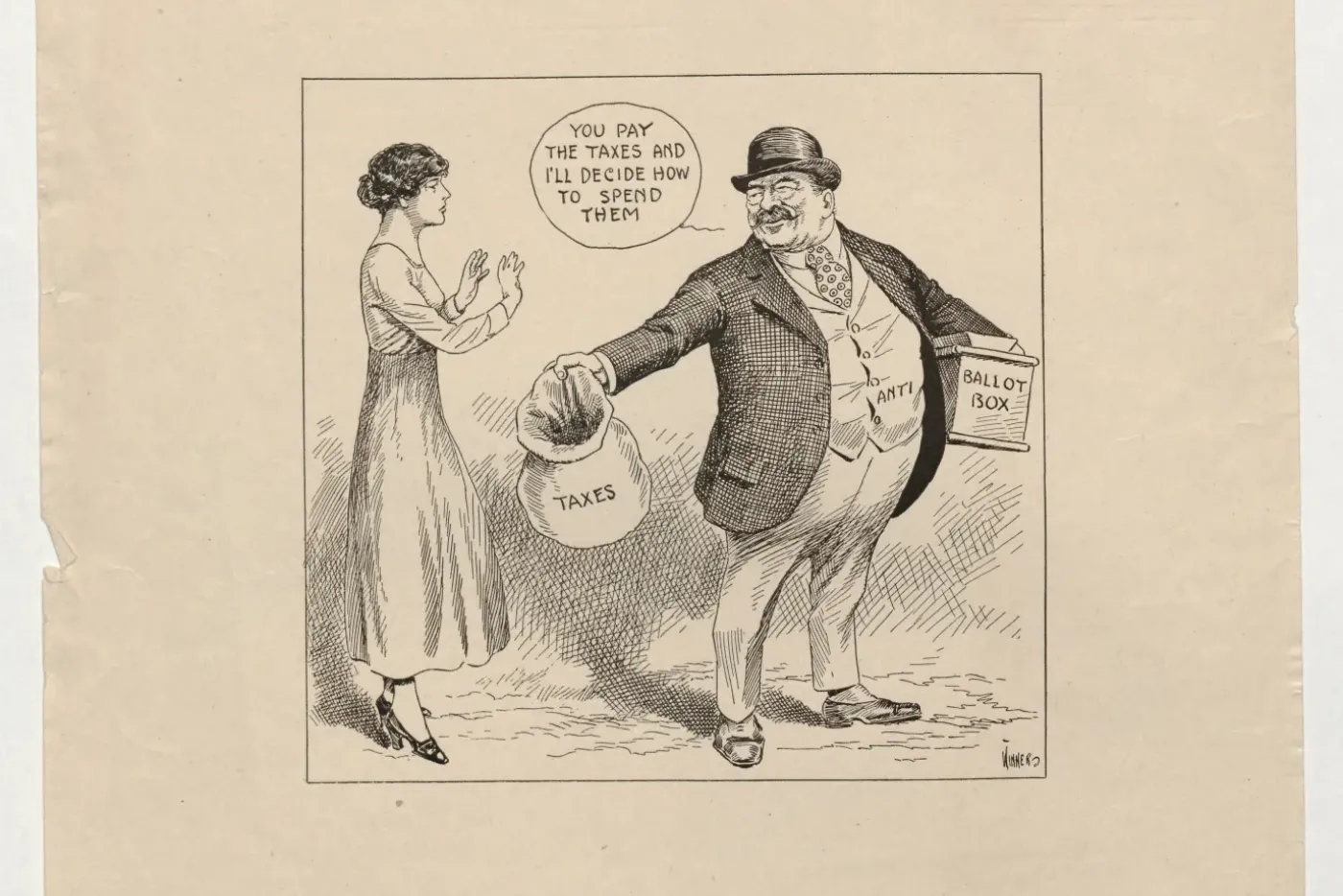
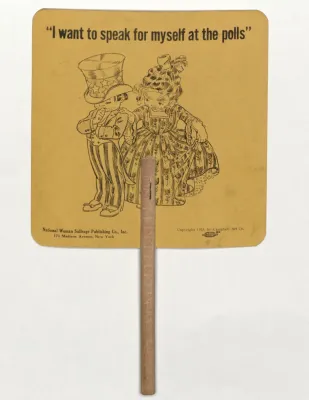
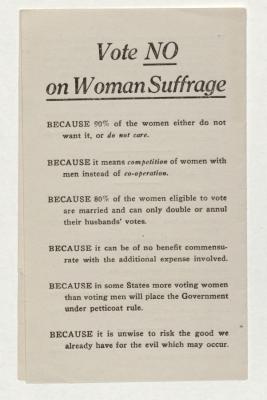
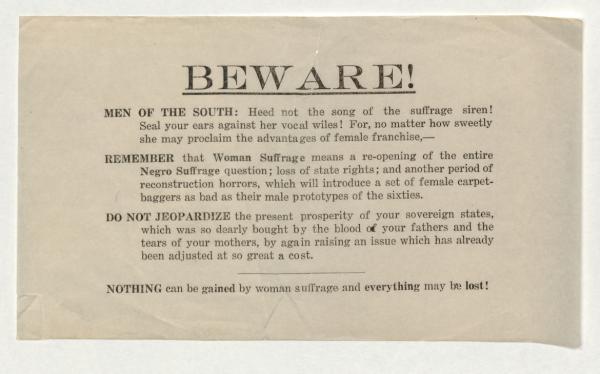
In response, an anti-suffrage movement grew to oppose North Carolina’s ratification. Textile mill owners, who relied on child labor, were among those who feared women’s voting power. Concerns about race influenced both sides of the debate. In August 1920, Governor Thomas W. Bickett called a special session to consider the amendment, but the state senate voted by a narrow margin to delay voting. Tennessee became the 36th state to ratify, changing federal law. Despite not being able to vote herself, Lillian Exum Clement, a lawyer from Asheville, was elected as a Buncombe County representative in 1920, and became the South’s first woman legislator. The legislature revised state laws that year to allow women to vote. Below, see examples of anti-suffrage materials in the State Archives.
The State Archives holds rich collections documenting three of the state’s leaders in the women’s suffrage movement. Read more about these women below.
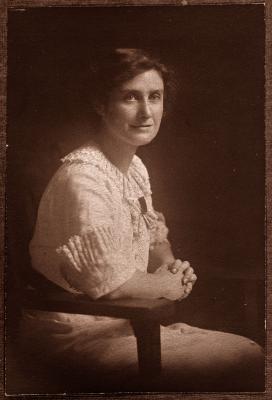
Gertrude Weil was a leader of the N.C. Equal Suffrage League and worked tirelessly on a grassroots campaign to persuade the legislature to ratify the 19th Amendment. After women gained the right to vote, Weil became the first president of the N.C. League of Women Voters. She died in 1971 only a few weeks after NC finally ratified the 19th amendment.
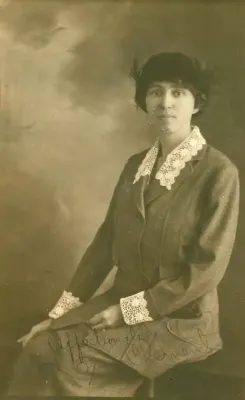
Lillian Exum Clement was an attorney in Asheville and elected as a state representative in 1920 before she herself could vote. She introduced 17 bills in a single term but did not seek reelection. Some of the laws she introduced include tuberculin testing for dairy herds—a measure for milk purity, secret ballot, and reducing time of abandonment necessary for divorce.
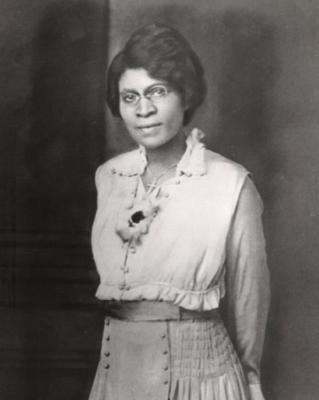
Charlotte Hawkins Brown, the granddaughter of formerly enslaved persons, founded a boarding school for African American students in Sedalia, near Greensboro. She also founded the N.C. Federation of Negro Women’s Clubs and organized voter registration drives in the 1920s-1940s to register African Americans.
Learn more online on the State Archives’ Women in North Carolina 20th Century History digital collection.
References
Caroline Pruden, “Women’s Suffrage in North Carolina,” NCpedia, State Library of N.C. August 2025. https://www.ncpedia.org/women-suffrage.
A. Elizabeth Taylor, “Lewis, Helen Morris.” NCpedia. State Library of NC. 1991. https://www.ncpedia.org/biography/lewis-helen.
Tom Belton, “North Carolina Equal Suffrage Association,” NCpedia, State Library of N.C. 2006. https://www.ncpedia.org/north-carolina-equal-suffrage-assoc.
Pro and anti-suffrage political cartoons, Equal Suffrage Amendment Collection. Private Collections. State Archives of N.C. https://digital.ncdcr.gov/documents?returning=true.
Women in North Carolina: 20th Century History, N.C. Digital Collection, https://digital.ncdcr.gov/collections/women-in-north-carolina-20th-century-history