
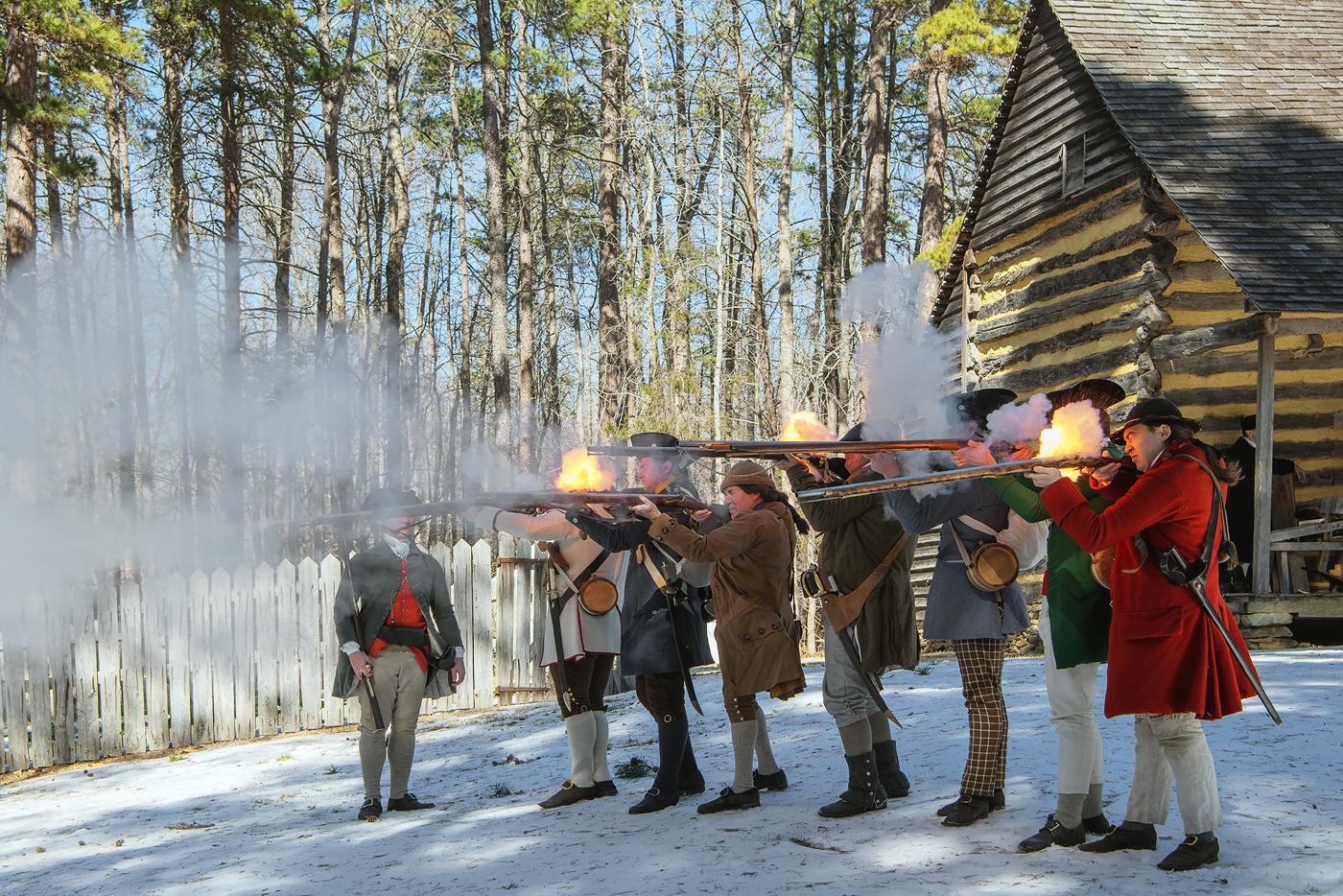
The Alamance County America 250 Celebration will be held at Alamance Battleground State Historic Site on Saturday, March 7, from 10 a.m.- 4 p.m. This free special event is part of North Carolina’s statewide recognition of the upcoming 250th anniversary of American independence and will explore the people, stories, and events that paved the way for the Revolutionary era. Alamance Battleground is administered by the Division of State Historic Sites, part of the N.C. Department of Natural and Cultural Resources.
Throughout the day, visitors of all ages are invited explore a variety of programs designed to bring colonial North Carolina to life, including living history demonstrations and reenactments, lectures on historical topics, a new temporary exhibit “Colonial People of North Carolina,” and displays from local partners highlighting the area’s history, culture, and resources.
This program is supported by a grant from America 250 NC, a program of the N.C. Department of Natural and Cultural Resources.
About America 250 NC
America 250 NC is North Carolina’s commemoration of the United States’ 250th anniversary and is led by the N.C. Department of Natural and Cultural Resources. For more information about America 250 NC, visit america250.nc.gov.
About Alamance Battleground
The Alamance Battleground State Historic Site preserves the location of the 1771 Battle of Alamance, a pivotal conflict between colonial militia and the Regulators. The 40-acre site functions as a community hub for historical interpretation through exhibits, reenactments, trails, and educational programs. Alamance Battleground State Historic Site is located at 5803 N.C. 62 S., Burlington, NC 27215. For more information, please contact the site at (336) 227-4785 or alamance@dncr.nc.gov.
About the North Carolina Department of Natural and Cultural Resources
The N.C. Department of Natural and Cultural Resources (DNCR) manages, promotes, and enhances the things that people love about North Carolina – its diverse arts and culture, rich history, and spectacular natural areas. At more than 100 sites across the state, the department enhances education, stimulates economic development, improves public health, expands accessibility, and strengthens community resiliency. For more information, please visit www.dncr.nc.gov.