
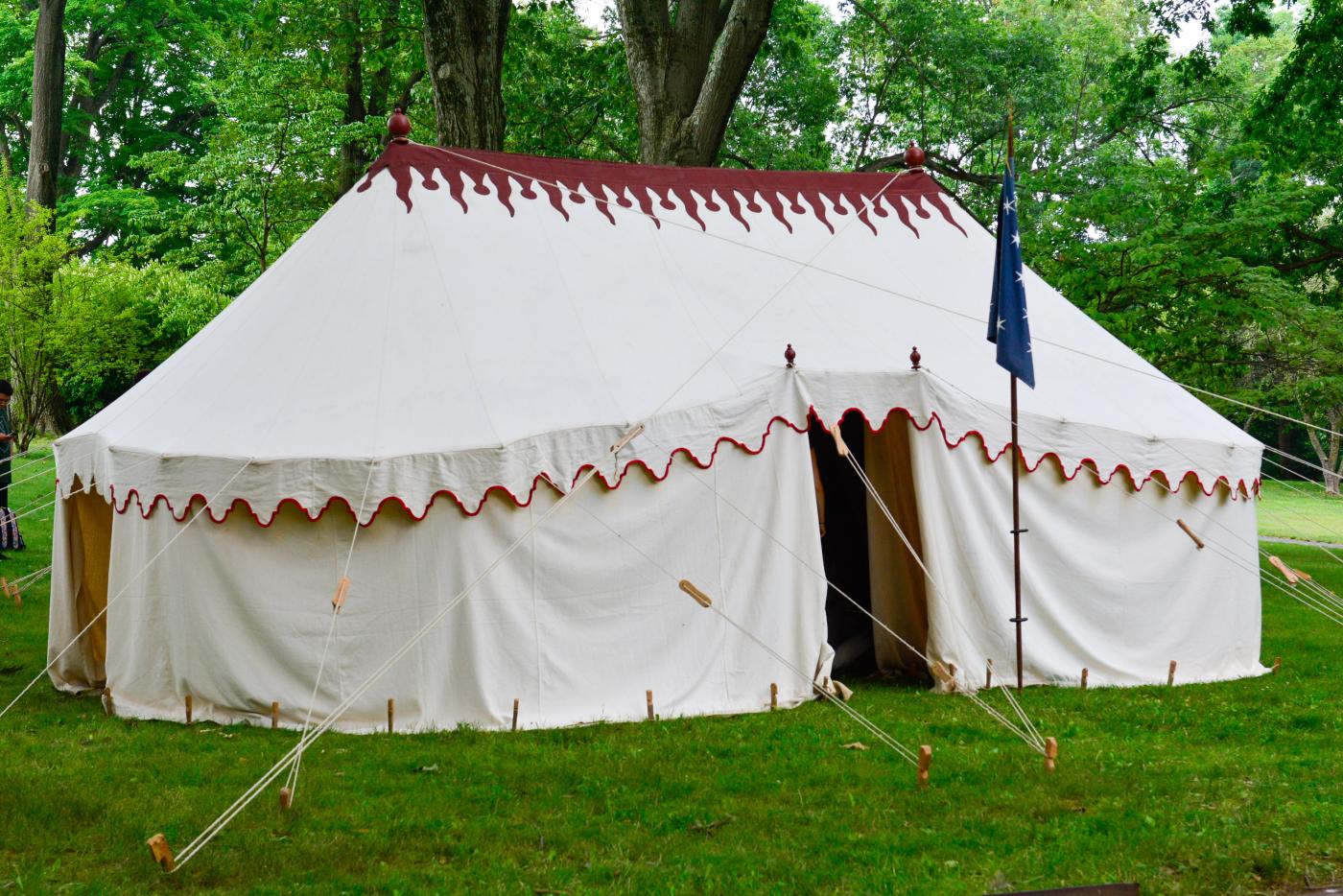
The Museum of the American Revolution’s First Oval Office Project, featuring a hand-stitched replica of George Washington’s sleeping and office tent which served as the command center for the Continental Army, is coming to the Tryon Palace historic site in New Bern March 26 -28. Tryon Palace is part of the North Carolina Department of Natural and Cultural Resources (DNCR). The First Oval Office Project and its adjoining educational programming is a signature event for DNCR’s America 250 NC initiative to commemorate the 250th anniversary of the signing of the Declaration of Independence and celebrate North Carolina’s important role in the American Revolution.
“Tryon Palace will be the only site in North Carolina to host the First Oval Office Project during 2026,” said DNCR Secretary Pamela B. Cashwell. “This immersive living history program can provide us a deeper understanding of the Revolutionary War by telling the story of General Washington and all those who served alongside him.”
The First Oval Office Project travels the country providing interactive education and outreach programming that brings George Washington’s wartime headquarters to life. At the heart of this interpretation is the full-scale replica of Washington’s Revolutionary War tent — where he slept, made critical decisions, wrote correspondence, and led the Continental Army. Often referred to as the “First Oval Office,” the original tent was a command center and is a continuing symbol of leadership. A team of interpreters from Philadelphia’s Museum of the American Revolution — where the original sleeping and office tent is on permanent display — will be on site to guide visitors and answer questions about Washington’s military life while on campaign.
“Tryon Palace is excited to host this special event during America’s semi-quincentennial year,” said Executive Director Chrystal Regan. “This inspiring program is one you will not want to miss.”
For more information, go to tryonpalace.org or call 252-639-3525.
About America 250
NC America 250 NC is North Carolina’s commemoration of the United States’ 250th anniversary and is led by the N.C. Department of Natural and Cultural Resources. For more information about America 250 NC, visit america250.nc.gov.
About Tryon Palace
Tryon Palace Historic Site and Gardens is part of the North Carolina Department of Natural and Cultural Resources (DNCR). The original Tryon Palace building, the Governor’s Palace, was completed in 1770 and is North Carolina’s first colonial and first state capitol. The reconstructed.
Tryon Palace includes historic buildings, gardens, and the North Carolina History Center. At the North Carolina History Center are interactive exhibits, galleries, a performance hall, the museum store, and a waterfront café. Tryon Palace's mission is to welcome, inspire, and engage all visitors and patrons to discover eastern North Carolina's rich and dynamic history. As North Carolina's first permanent colonial and state capitol, we interpret the history of our community and state using living history, programming and exhibits to present an authentic view. With scholarship and integrity, we preserve and interpret buildings, landscapes, collections, and gardens that tell the story of One History, Many Voices.
About the North Carolina Department of Natural and Cultural Resources
The N.C. Department of Natural and Cultural Resources (DNCR) manages, promotes, and enhances the things that people love about North Carolina – its diverse arts and culture, rich history, and spectacular natural areas. At more than 100 sites across the state, the department enhances education, stimulates economic development, improves public health, expands accessibility, and strengthens community resiliency. For more information, please visit www.dncr.nc.gov.