
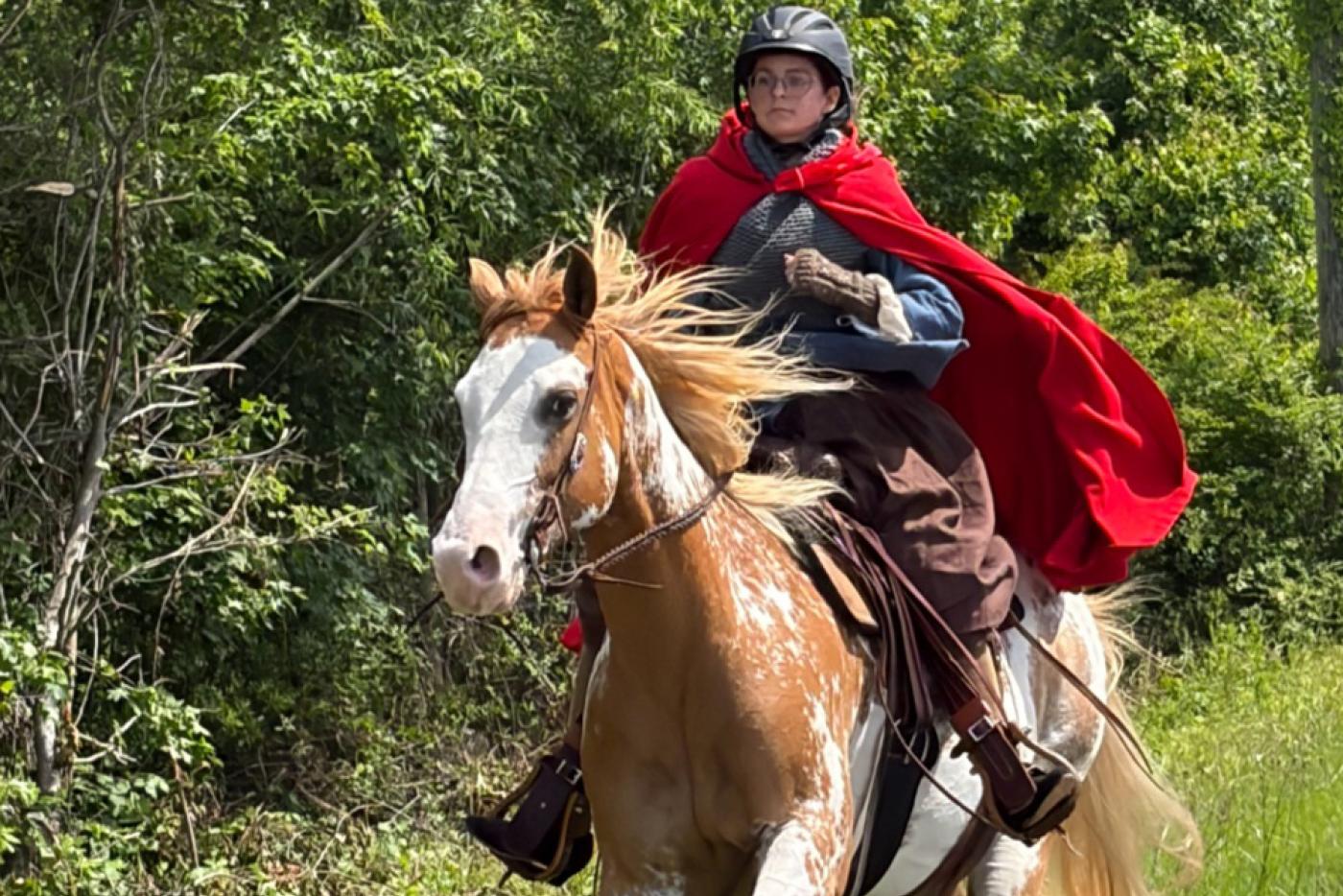
On May 30, 2026, the sound of hoofbeats carried across northeastern North Carolina. From Currituck County through Camden and Pasquotank to Perquimans County, riders traced the local lore of what would have been the journey of Betsy Dowdy, a 16-year-old whose courage has been celebrated in local stories for generations.
No surviving contemporary document conclusively records Betsy’s journey. Her ride comes to us through oral tradition, which is why historians describe it as a local legend rather than a fully documented military episode. That uncertainty, however, has not diminished its importance to the people who have kept the story alive.
Reimagining the Ride for 2026
The May 30 recreation transformed that traditional story into a shared public experience. Rather than expecting one horse and rider to undertake the entire modern route, which is now divided by busy roads, bridges and developed communities, the organizers created a relay-style, multimedia interpretation involving the four counties through which Betsy traditionally traveled.
Currituck represented the beginning of the journey. From the county associated with Betsy’s home and the Banker horses, the story moved westward toward the mainland. Portions of the Currituck and Pasquotank rides were recorded in advance, allowing audiences to follow the journey without placing riders or horses in unsafe traffic conditions.
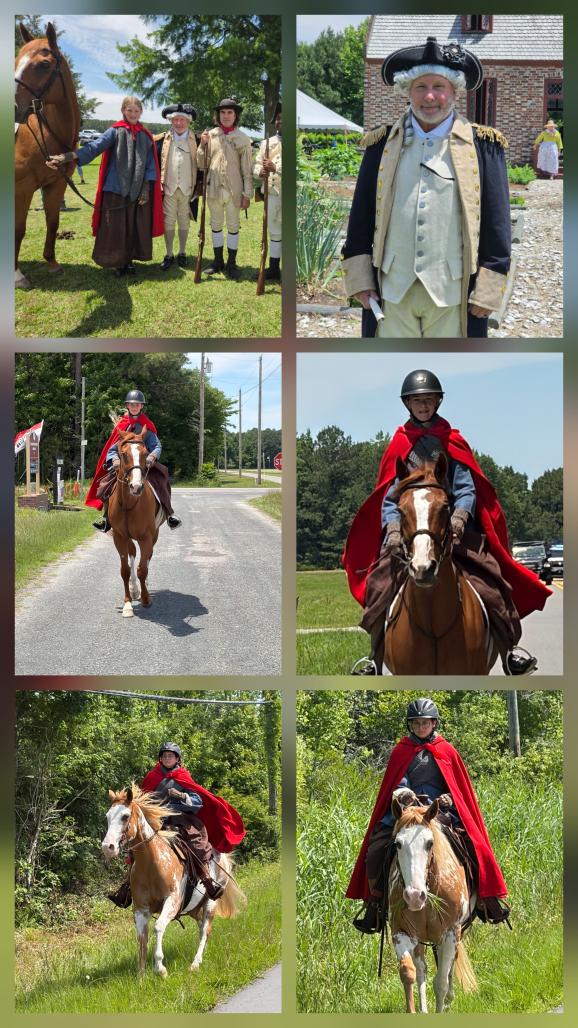
In Camden County, spectators gathered at Lamb’s Marina near the historic Lamb’s Ferry crossing. Kelly Curry, riding Chili, carried the legend through this important section of the route. The location recalled an era when ferries, rather than highway bridges, connected communities divided by the region’s rivers and sounds.
The commemoration then continued through Pasquotank County and towards Hertford. In Perquimans County, the final live rider, Brooke Baker, riding Zelley, traveled along Harvey Point Road and approached the grounds of the historic Newbold-White House. There, Revolutionary War reenactors waited in a militia encampment for “Betsy” to arrive with news of the British advance.
The approaching horse, the colonial clothing and the waiting militia gave spectators a sense of the urgency at the heart of the local myth: a warning had to reach the right person before it was too late.
The free festivities at the Newbold-White House continued from late morning into the afternoon. Revolutionary War reenactors and historical exhibitors interpreted eighteenth-century life, while tours introduced visitors to one of North Carolina’s oldest surviving houses. Vendors, food and hands-on activities made the program welcoming for families as well as dedicated history enthusiasts.
The event was supported with a grant from the America 250 NC initiative, administered by the North Carolina Department of Natural and Cultural Resources. Its placement within the Semiquincentennial observance connected a regional story to the broader history of the nation’s founding.
Four Counties, One Story
The route itself was central to the meaning of the recreation. Currituck, Camden, Pasquotank and Perquimans did not merely provide a backdrop; each represented a chapter of Betsy’s ordeal.
Currituck provided the maritime landscape and horse culture from which the legend emerged. Camden symbolized the ferry crossings that once made travel possible. Pasquotank represented the long mainland passage, while Perquimans was the main destination: Hertford and the waiting militia.
By involving all four counties, the organizers demonstrated that history does not stop at modern jurisdictional lines. Stories move along roads and rivers, through families and across generations.
This event also returned attention to the local Banker horses. Descended from horses that have lived on North Carolina’s barrier islands for centuries, these small, resilient animals are inseparable from the Betsy Dowdy traditional story. Black Bess is remembered not simply as transportation but as Betsy’s companion in an exhausting and dangerous undertaking.
The May 30, 2026, ride honored the cultural power of Betsy’s story. It did not need to settle every unanswered question to communicate something true about the region: generations of North Carolinians have found meaning in the image of a teenager deciding that danger was no excuse for inaction.
If you would like to submit your own "Reflecting on 250" blog, please email Chelsea.Kiefer@dncr.nc.gov.