
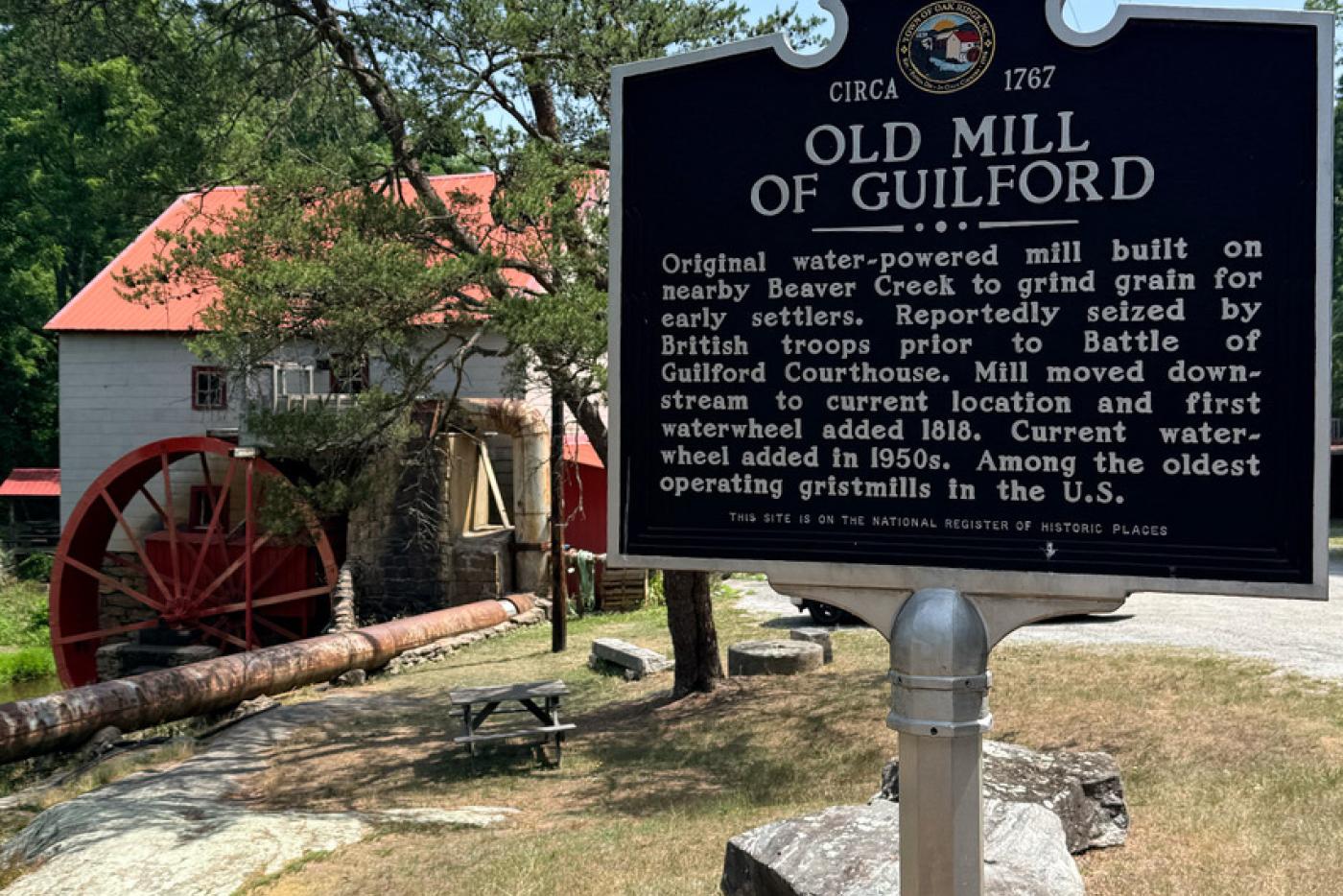
As America counts down to its 250th birthday, the crowds chasing history often find themselves pressed against velvet ropes at the liberty bell in Philadelphia or jostling for selfies at Boston's Freedom Trail. But the past breathes differently in North Carolina, beside the steady groan of a water wheel that has turned through every season since before the Declaration of Independence was signed.
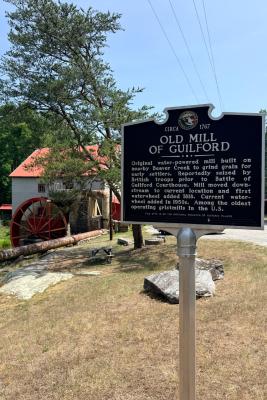
The Old Mill of Guilford does not announce itself with gift shop glitter. It simply works. Built in 1767 on land granted by an English earl to Daniel Dillon eight years prior, the mill has ground grain through the birth of a nation and the long centuries since.
The sensory effects are immediate: the rush of water, the metallic grind of stone against grain. This is craftsmanship unchanged, the same mechanical rhythm that fed colonial settlers and, briefly, occupied British forces.
On February 10, 1781, General Charles Cornwallis needed supplies for his campaign through the Carolinas. His troops reportedly seized the mill, commandeering its output for the Crown. Local lore holds that James Dillon, then running the operation, hid behind a tree as red coats approached. The British opened fire. A bullet found his left foot.
Dillon survived. The mill endured.
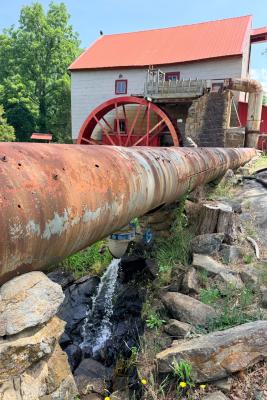
Inside the weathered timber structure, the machinery commands attention: a 24-foot red wooden wheel spins at approximately 4.6 RPM, generating 15 kilowatts of mechanical power that has changed little in principle since the 18th century. That power drives a conveyor belt lifting raw grain from basement storage into a network of wooden tubes overhead. When the grain is ready for grinding, a wooden slip lifts and releases it into the grinding machine, where the same granite stone has turned continuously for the last seventy years.
Today, as the nation prepares for its semiquincentennial celebrations, the Old Mill of Guilford offers something increasingly rare: not a reenactment, not a replica, but continuity. The wheel still turns. The stones still grind. And visitors who linger long enough can feel the weight of its years turning beneath their feet.