
Every summer, between Juneteenth and July 4th, communities across the country come together for Civic Season – a new annual tradition that encourages young people to learn and engage with history. As we approach Civic Season, this 250th year since the signing of the Declaration of Independence, we reflect on North Carolina’s past and the long struggle over power to participate in civic life. To understand our responsibility as citizens today, we must look into our history and examine the conflict, reform, and resistance that have shaped our state.
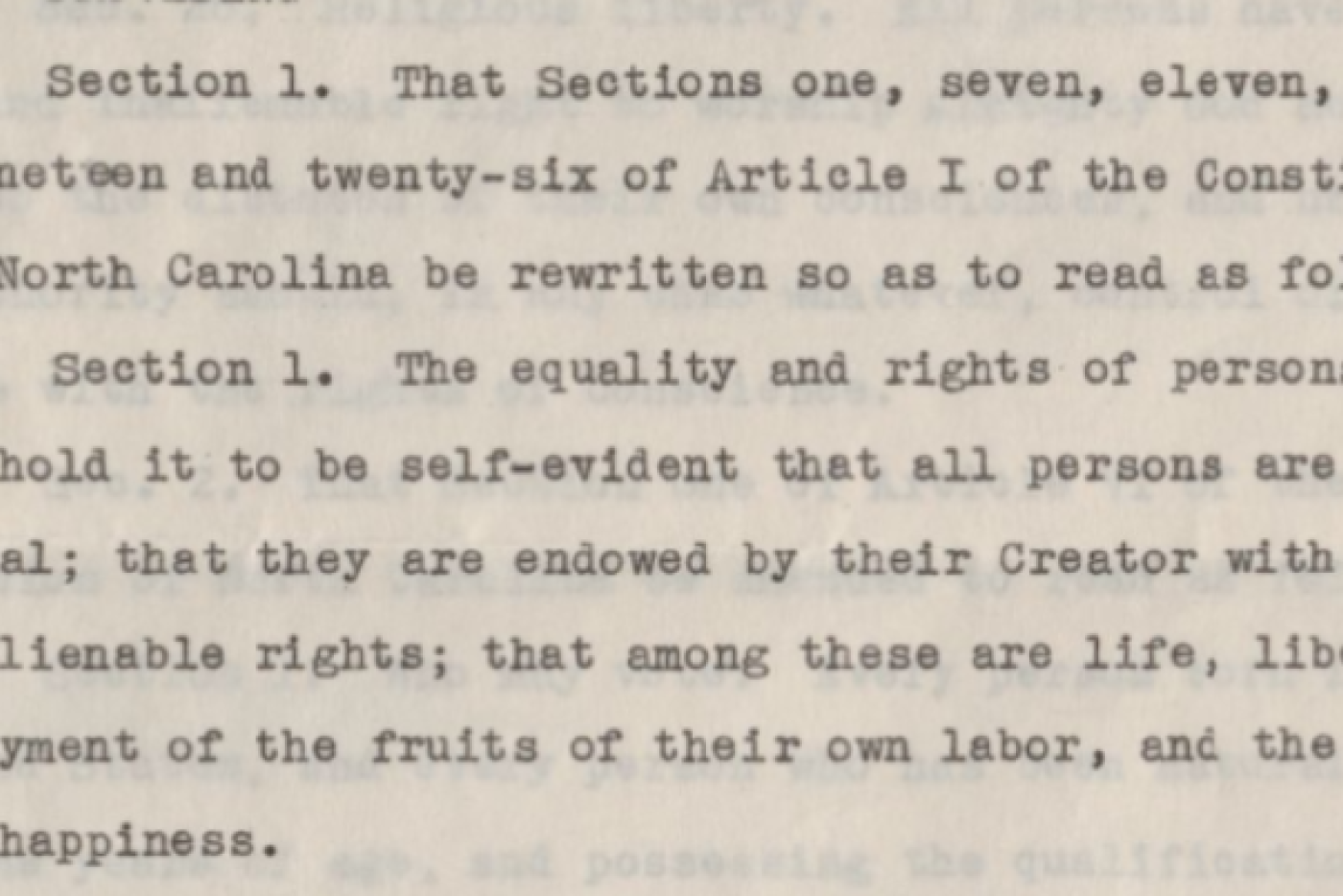
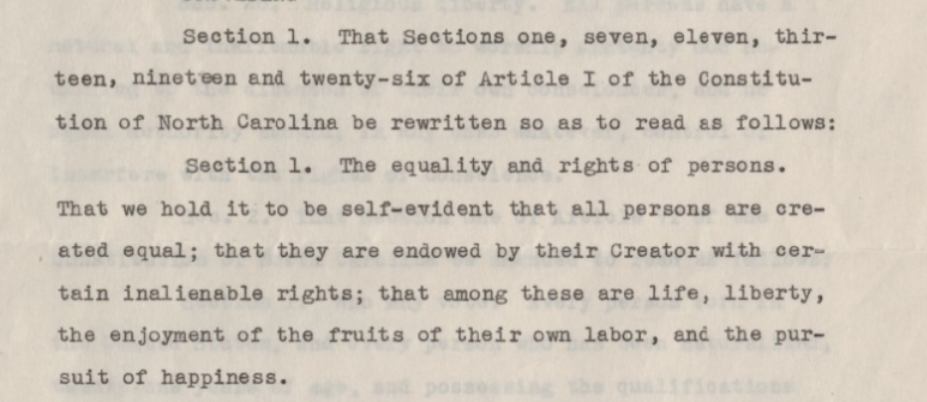
Although in 1920 the legislature revised state laws to allow women to vote, North Carolina’s constitution did not reflect this change for more than two decades. Not until 1946 did lawmakers adopt a constitutional amendment titled “The Equality and Rights of Persons”.
This change came from an increase of women in the work force in World War II, which dramatically reshaped gender roles across the country. With war deaths leaving widows with children, support increased for political rights for those who were heads of households. As men left for military service, women stepped into jobs that had long been closed to them. They worked in factories, kept essential industries running, and served in new military branches such as the Women’s Army Corps and the Women’s Airforce Service Pilots. Their contributions made it clear that women’s role in society was not only reproductive but profoundly productive.
By the mid‑1940s, the idea that women should be fully recognized in the state constitution had gained momentum. Even so, North Carolina did not officially endorse the 19th Amendment until 1971—one of the last states to do so.
Precedents for the 1946 Amendment, Section 1, included the Declaration of Independence and the Declaration of Rights in the North Carolina Constitution of 1868. The phrase “all men are created equal” promoted racial equality with language that was familiar to most citizens. In 1946, the state legislature changed the language to “all persons are created equal.” Although the state lagged behind the national government in accepting women’s suffrage, its 1946 amendment made its constitution more inclusive than that of many other states.
Explore more primary sources in the State Archives’ digital collection:
- State Constitution of 1868, VC.47.6, State Archives of N.C.
- Amendment to the State Constitution, “The Equality and Rights of Persons,” 1946, VC.48.15.
- World War I & II posters.