
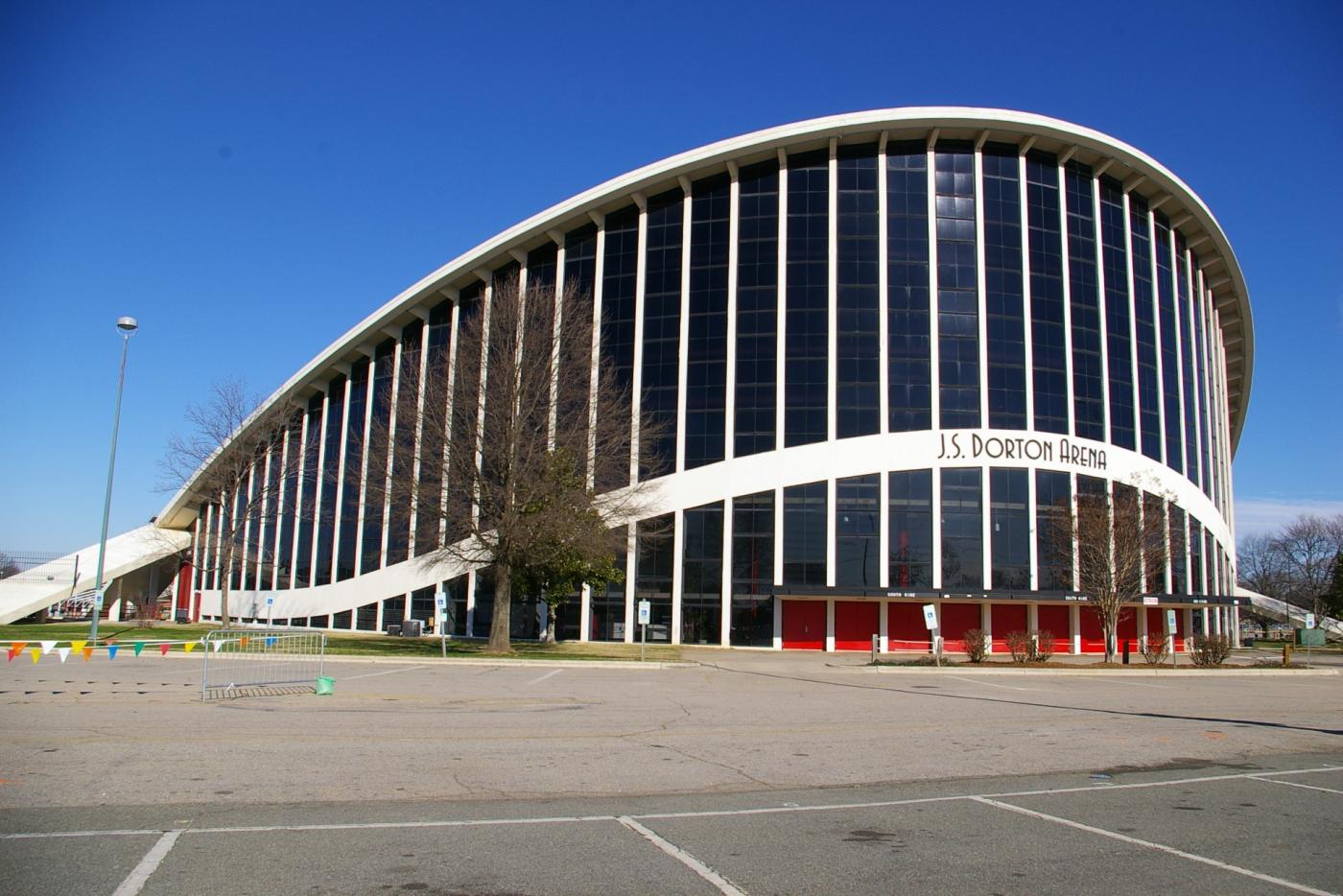
In an earlier posting of Worth Knowing, we featured the oldest known residence (to date) in North Carolina. This week, we share the story of one of the most recent architectural landmarks in our state, and one that is a tale of innovative design through geometry – many would say revolutionary – and the interrupted promise of an émigré to the United States.
While most North Carolinians know of Dorton Arena through happy memories of attending the State Fair in Raleigh, fewer know the story of its creator Matthew Nowicki. Born abroad to a noted Polish family in 1910 as Maciej Nowicki, this man was responsible for one of the most ebullient expressions of
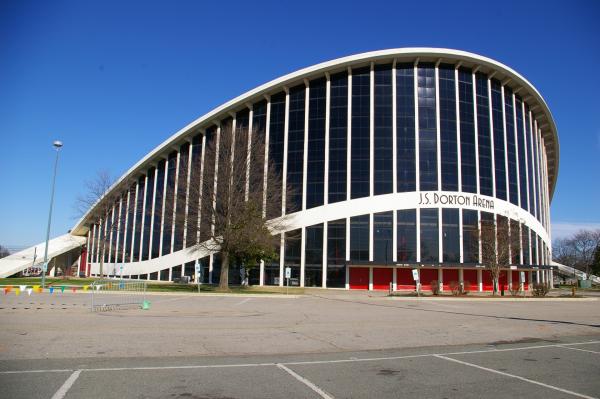
modernist architecture in the Old North State, and indeed, one that sparked an entire crop of similar large-scale public buildings worldwide (including sporting halls and airports). Its iconic “saddle” parabolic roof was born from both a spirit of international collaboration and a tragic loss.
Trained in Poland as an architect, Nowicki spent World War II first as a member of the Polish Armed Forces in 1939, and then in the underground Home Army during his homeland’s Nazi occupation. After the large-scale destruction and damage to the Polish capital of Warsaw, he worked on designs to undertake the rebuilding of this city at the official Bureau of Rebuilding the Capital, as an expression of the spirit of the Polish people.

In late 1945, Nowicki took a post as Polish cultural attache in Chicago, and next helped to design the United Nations Headquarters, then under development in New York City. Professional interactions there led to an appointment as Acting Head of the School of Design at North Carolina State University (NC State) in Raleigh with his architect wife, Stanislawa Sandecka Nowicka, also receiving a position as visiting professor. Nowicki was a growing light in the architectural world, and Raleigh and North Carolina were to benefit from this couple’s genius.
Nowicki tragically lost his life in 1950 in a plane crash in Egypt during travel from India, where he was designing the plan for the new capital of the Indian state of Punjab. Though his life was cut short in a tragic plane crash, his "bubbling humanity" and pioneering spirit thankfully did not disappear.
Conceived originally as a modern building for a modern state, and designed to be a landmark, Dorton Arena was one of Nowicki’s last designs, begun in 1949 but completed only in 1953 through his colleague William Henry Deitrick.
After his untimely death, his NC State students honored him by launching a publication that would put the College of Design on the proverbial map. They launched The Student Publication, a platform that would go on to grab the design world’s attention and define the school's commitment to creating not just architects, but "well-developed citizens." Through its design school, NC State continues to make a stamp on North Carolina and the United States through architecture expression worthy of preservation.
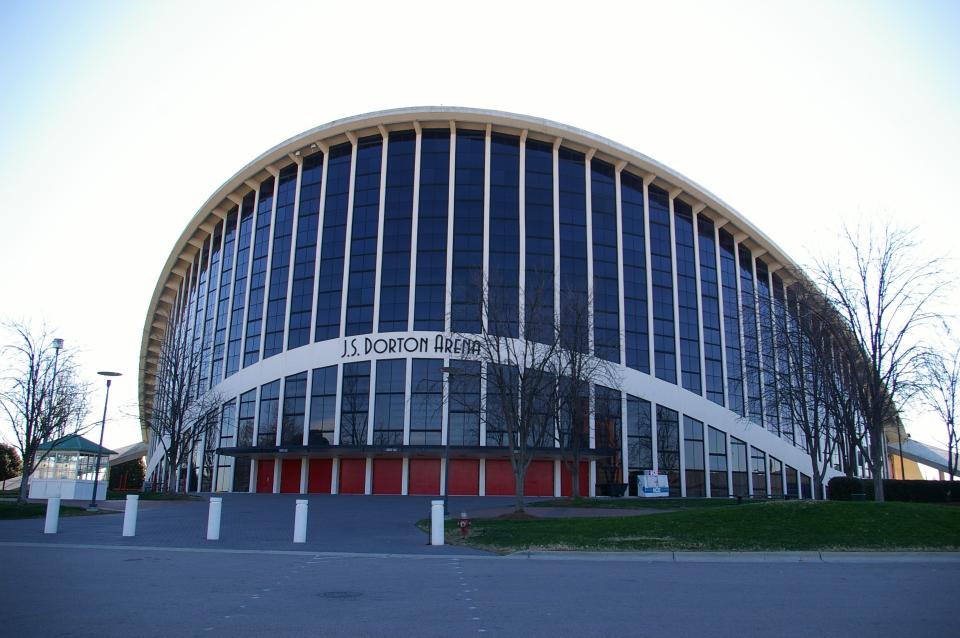
In 1973, the arena was listed in the National Register of Historic Places, a mere 20 years after its completion, and unusually before the typical 50-year look-back period for the National Register ended, its nomination citing its “revolutionary design” as “an internationally famous prototype of a parabolic suspension structure” with its “revolutionary expanse of uninterrupted space inside the arena…the result of a rare integration of architecture and engineering.”
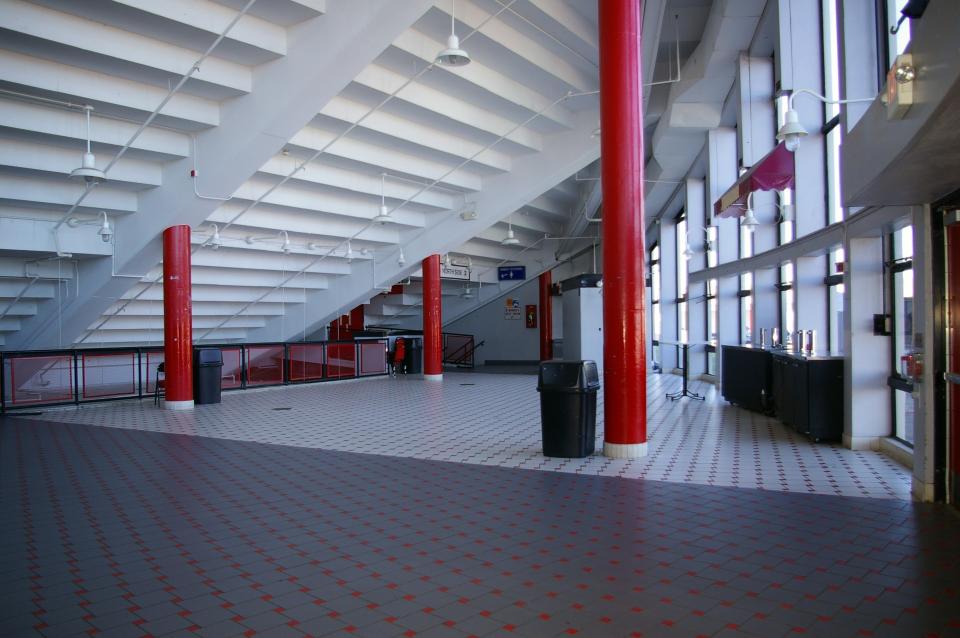
In 2002, Dorton Arena was designated a National Civil Engineering Landmark as the first permanent use of a cable-supported roof system in the world.
In our revolutionary, semi-quincentennial year of 2026, the memory of Matthew Nowicki and his innovative contributions certainly qualify as worth knowing, through his expression of revolutionary architecture that is part of our shared North Carolina memory.
The North Carolina State Historic Preservation Office is proud to continue to provide technical assistance for the preservation of Dorton Arena through its Restoration Services Branch to the North Carolina State Fair Division, a unit of the North Carolina Department of Agriculture and Consumer Services, the day-to-day stewards of Dorton Arena.
Sources:
https://www.ncpedia.org/biography/nowicki-matthew
https://www.asce.org/about-civil-engineering/history-and-heritage/historic-landmarks/dorton-arena
From Tragedy, a New School Found Its Voice | College of Design
https://www.ncagr.gov/divisions/ncstatefair/bookyourevent/dortonarena/history
https://www.dncr.nc.gov/blog/2016/08/31/dorton-arena-architect-matthew-nowicki