
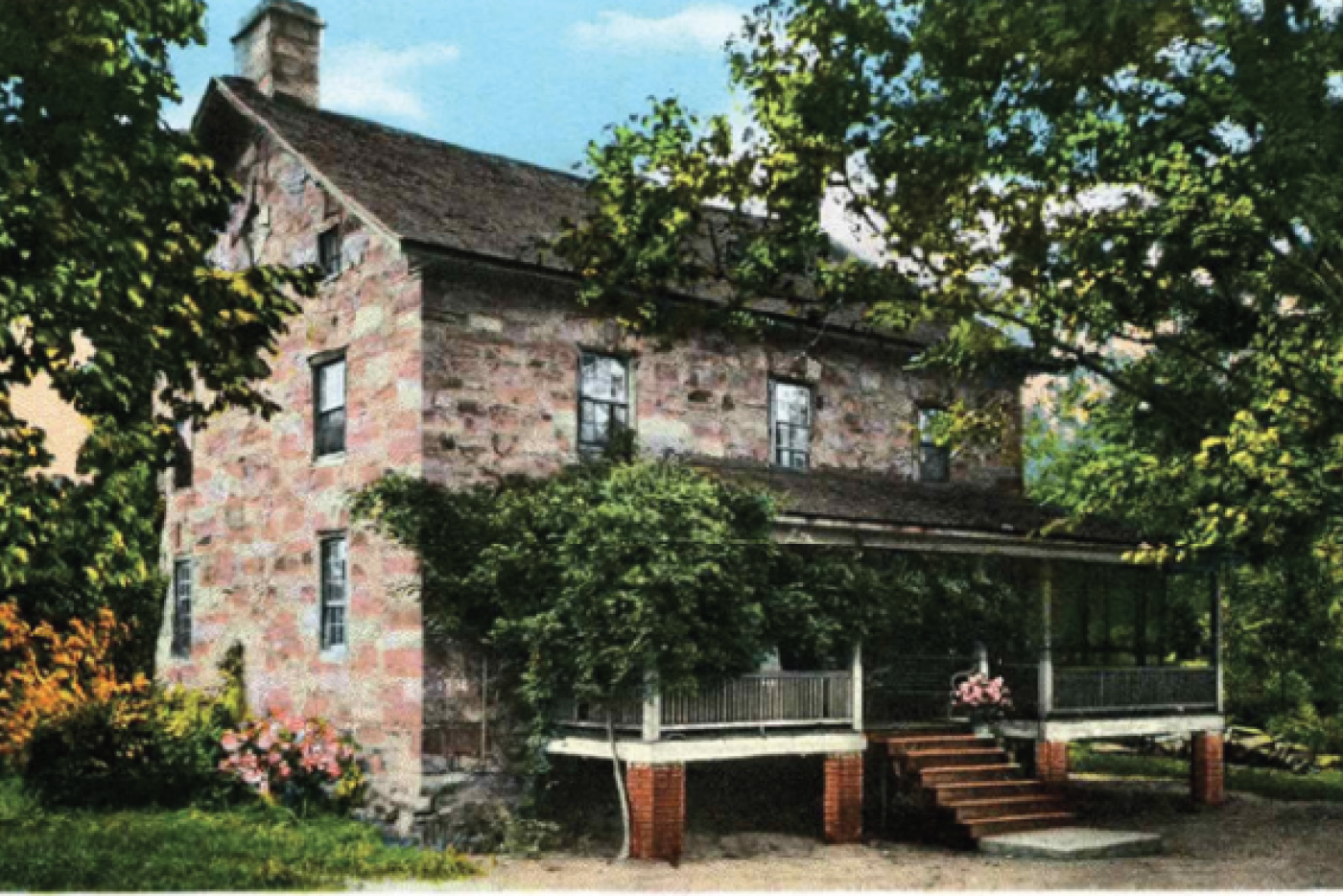
Charlotte began as a trading path crossroads between the Yadkin and Catawba Rivers. Benefitting from trade with the nearby Catawba tribe, European settlers established Mecklenburg County in 1762. Many were Scots-Irish and German, migrating south along the Great Wagon Road into the Carolina backcountry. Unlike the Highland Scots, who were more likely to be loyalists, the Scots-Irish fiercely supported the Patriot cause.
Hezekiah and Mary Alexander descended from Scots-Irish immigrants and migrated south from Pennsylvania in 1768 with their growing family. Several relatives had already settled the area, including a cousin, Col. Adam Alexander, who led the county militia. Hezekiah quickly became a leader in the new town of Charlotte, worked to found Queens College, and became a member of Mecklenburg’s Committee of Safety. That group functioned as a local government and signed the Mecklenburg Resolves on May 31, 1775.
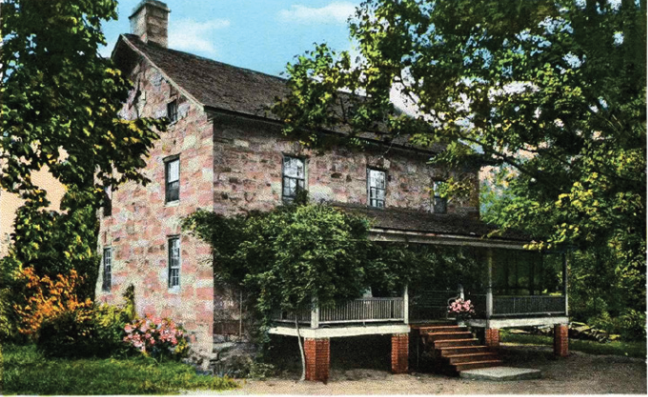
Several of his close associates also played important roles. Attorney and statesman Waightstill Avery boarded at the Alexander house, and both men helped write the first state constitution in 1776. Avery later represented the young state during the 1777 treaty with the Cherokee. John McNitt Alexander was Hezekiah’s younger brother, whose son, John McKnitt Alexander, Jr., published the first account of the Mecklenburg Declaration of Independence in a newspaper in 1819.
The citizens of Mecklenburg were intent on defending their rights from perceived injustices from Parliament. Local leaders met in Charlotte on May 19, 1775, when they heard about the Battle of Lexington and Concord. They wrote and published resolutions in the newspaper and sent Captain James Jack to Philadelphia to deliver the document to the three North Carolina delegates at the Continental Congress. Later accounts of the resolves called it a “Declaration of Independence,” but the published Mecklenburg Resolves still offered a sliver of hope for reconciliation with Great Britian. The only copy of what was later termed “the Mecklenburg Declaration” burned in the clerk of that convention’s house in 1800. The clerk, John McKnitt Alexander, later created several copies from memory and sent at least two to colleagues and passed another down to his son, J.M. Alexander, Jr.
When former president John Adams saw an article about the Mecklenburg Declaration of Independence in the June 1819 Essex Register, he immediately mailed a copy with a letter to his friend and fellow former president Thomas Jefferson. Adams described the article as “one of the greatest curiositys and one of the deepest Mysterys that ever occured.” In his response, Jefferson claimed the Mecklenburg Declaration of Independence was “spurious” and questioned whether the narrator of the document was “as fictitious as the paper itself.” Jefferson, though doubtful of the Mecklenburg Declaration of Independence’s existence, asserted that he “must not be understood as suggesting any doubtfulness in the state of N. Carolina.” In the colonies’ fight for liberty from Britain, “no state was more fixed or forward.”
Detractors of the “MeckDec” say that witnesses later in life remembered announcements of the May 31 resolves, rather than a declaration of independence, on May 20. Unless an original Mecklenburg Declaration of Independence surfaces, historians will remain skeptical. The date of the alleged MeckDec (May 20, 1775) is part of North Carolina’s claim to be “First in Freedom.” Despite the controversy, the state flag promotes both the dates of the MeckDec and the Halifax Resolves.
The following primary sources provide more background on the Mecklenburg Resolves and the the MecDec as J.M. Alexander remembered it:
“Charlotte Town May 31, 1775…Resolves,” North-Carolina Gazette, June 16, 1775, p. 3, State Archives of N.C., newspapers.digitalnc.org/lccn/sn84026629/1775-06-16/ed-1/seq-3/.
Mecklenburg “Declaration of Independence,” Raleigh Register, April 30, 1819, p. 1, UNC collection, newspapers.com/article/weekly-raleigh-register-mecklenburg-decl/5825409/.
John Adams to Thomas Jefferson, June 22, 1819; Thomas Jefferson to John Adams, 9 July 1819; John Adams to Thomas Jefferson, July 21, 1819, Founders Online, National Archives, founders.archives.gov/documents/Jefferson/03-14-02-0409-0001. Original source: The Papers of Thomas Jefferson, Retirement Series, vol. 14, 1 February to 31 August 1819, ed. J. Jefferson Looney. Princeton: Princeton University Press, 2017, pp. 447–448, 523-525, 545-546.
“Declaration of Independence by the Citizens of Mecklenburg County on the Twentieth Day of May, 1775 with Accompanying Documents and the Proceedings of the Cumberland Association,” Raleigh: Lawrence & Lemay, printers to the State, 1831, pp. 15-19 for Depositions, Y154 2:M4 1831, State Library of N.C. and loc.gov/item/02003677/.
Laws and Resolutions of the State of North Carolina, Passed by the General Assembly at Its Session [1885], p. 539, State Publications collection, State Library of N.C., digital.ncdcr.gov/Documents/Detail/laws-and-resolutions-of-the-state-of-north-carolina-passed-by-the-general-assembly-at-its-session-1885/3889552?item=3915544.