
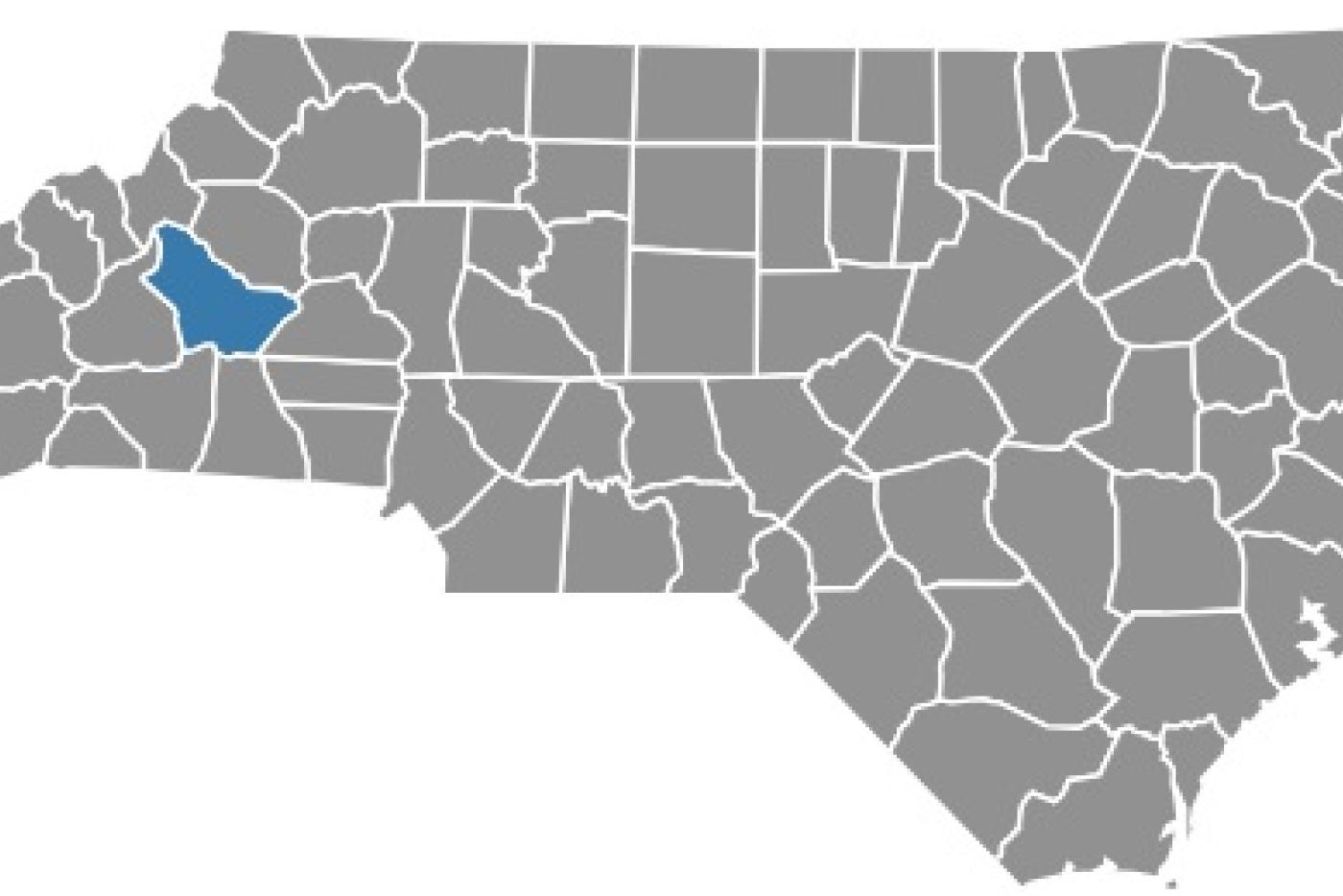
North Carolina formed Burke County from Rowan in 1777 and named it in honor of Dr. Thomas Burke, a physician, lawyer, member of the Continental Congress and later, Governor of North Carolina. Born in 1747 in County Galway, Ireland, Burke emigrated to Norfolk, Virginia in 1764 and began practicing law. He opposed the Stamp Act of 1765, became a supporter of American independence, and moved to Hillsborough in 1774. After serving in the Fifth Provincial Congress, Burke was elected to the Continental Congress and proceeded to Philadelphia in 1777 and served in that capacity until being elected governor in 1781. Burke’s term as governor was difficult. In September 1781, he was captured by the Tory David Fanning and was imprisoned on James Island near Charleston, South Carolina. Conditions there were deplorable and Burke’s health suffered as a result. In January 1782, Burke escaped and returned to North Carolina but did not stand for reelection in April. He never fully recovered his health and died on his plantation in Orange County in December 1783.
Located on the eastern edge of the Blue Ridge Mountains, what is now Burke County was inhabited by indigenous people of the Mississippian culture, who built a 12-acre site known as Joara, near the present-day county seat of Morganton. In 1567, a Spanish expedition under command of Juan Pardo came through the area and built Fort San Juan at the Joara site. The following spring, Native warriors attacked and destroyed the fort. By the mid-eighteenth century, the area was being settled by Scots-Irish and German groups.
Burke County encompasses 514 square miles and has a population of approximately 88,000 residents. It is bordered by Avery, Caldwell, Catawba, Cleveland, Rutherford, and McDowell counties. Several major highways run through the county, and the Catawba River is the county’s most significant waterway. Several federal and state protected natural areas are fully or partially within the county’s boundaries, including South Mountains State Park, Lake James State Park, the Blue Ridge Parkway, Linville Falls, Linville Gorge, and Pisgah National Forest. Burke County is also home to Western Piedmont Community College.