
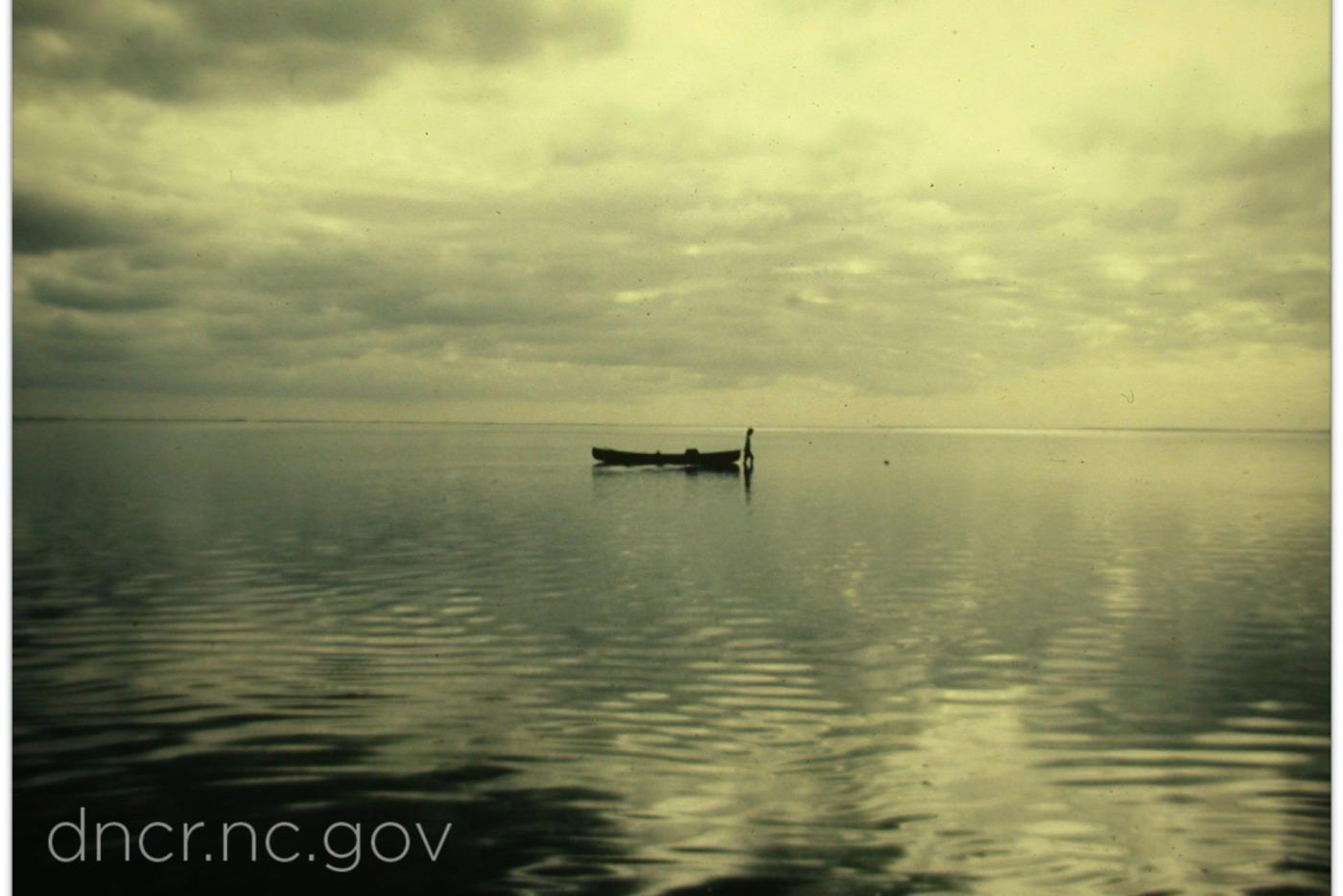
North Carolina’s rich history includes how people how navigated what is now North Carolina, using its more than 37,000 miles of lakes, rivers, sounds, and inlets. With access to the Atlantic Ocean and the second largest estuary system in the United States, our waterways have for millennia served as a travel system and a means of connection deeply embedded in our state’s cultural landscape for both Indigenous and historic peoples residing here.
For many remote areas of North Carolina, water remained the main thoroughfare until well into the nineteenth century. In particular, handmade dugout canoes offered a reliable means of transit, and although they may have only been one type of watercraft used by American Indians in the past, the archaeological record demonstrates that the canoe represents a long-lasting cultural form of water transportation. To date, 77 historic dugout canoes have been discovered in North Carolina, ranging in date from the Woodland Period to post-European contact. In fact, the oldest known North Carolina dugout canoe is over 4000 years old, and we know of two canoes that were still in use right around the time of the American Revolution.
Historic canoes have been found all over our state – in riverbeds and creeks, along lake shores, as well as submerged in deeper waters. The massive trees from which they were hewn were from old growth forests and typically either bald cypress or southern yellow pine. To fabricate a dugout canoe, a tree was felled, and then gum or rosin was used in combination with fire to char the tree and the burned wood scraped out. Grease was applied to seal the wood.
The finished canoes were heavy, so it is believed that they likely stayed in or around the bodies of water for which they were crafted. Many early indigenous communities were nomadic and may have buried the watercraft along the shore, ensuring their community would have access to the canoes when they returned to the area the following season. Dugout canoes were so effective that they were commonly in use until the modern era as they did not require fasteners or sails, making them the perfect watercraft for our variable waters, especially for the more remote parts of Eastern North Carolina. Even today, canoeing and kayaking are common activities and sometimes the best way to reach parts of our state’s coastline and remote inner waterways.
Historic dugout canoes are frequently discovered partially or fully concealed in sediment, which contributes to their excellent preservation, despite being buried for hundreds, if not thousands of years. Freshwater environments provide protection due to lower sedimentation rates compared to seawater and less oxygen, and locations are generally more remote.
The North Carolina Office of State Archaeology (OSA) Conservation Lab today stewards six historic dugout canoes from different sites, including Lake Phelps, Lake Waccamaw, and the South River. Beginning in the 1980s, OSA teams discovered and later recovered canoes from Lake Phelps, which are now undergoing further assessment and conservation treatment.
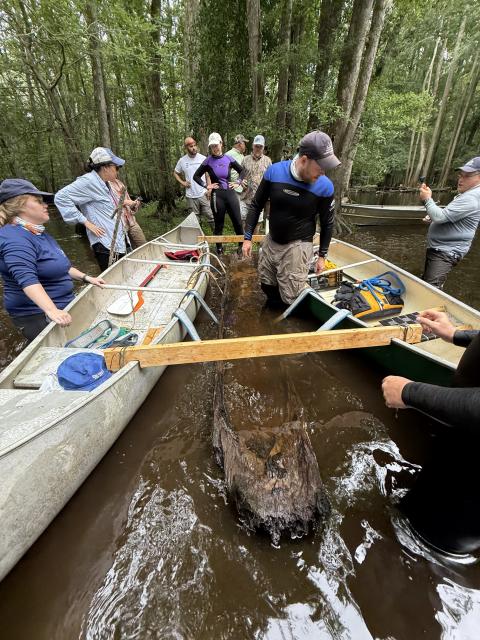
Working in partnership with tribal members and local communities, OSA teams more recently recovered both the 27.5-foot Lake Waccamaw and 12.5-foot South River canoes intact and transported them to our lab for conservation. Both canoes are very heavy and fragile, thus local support was critical in safeguarding these two significant pieces of North Carolina history. Canoes are integral to North Carolina’s past and remain a steadfast symbol of exploration, endurance, and freedom.
Images:
-Lake Phelps. Image by DNCR.
-Recovery of the canoe from the South River in 2025, with modern canoes used to float it upriver to the boat ramp. Image by DNCR.