
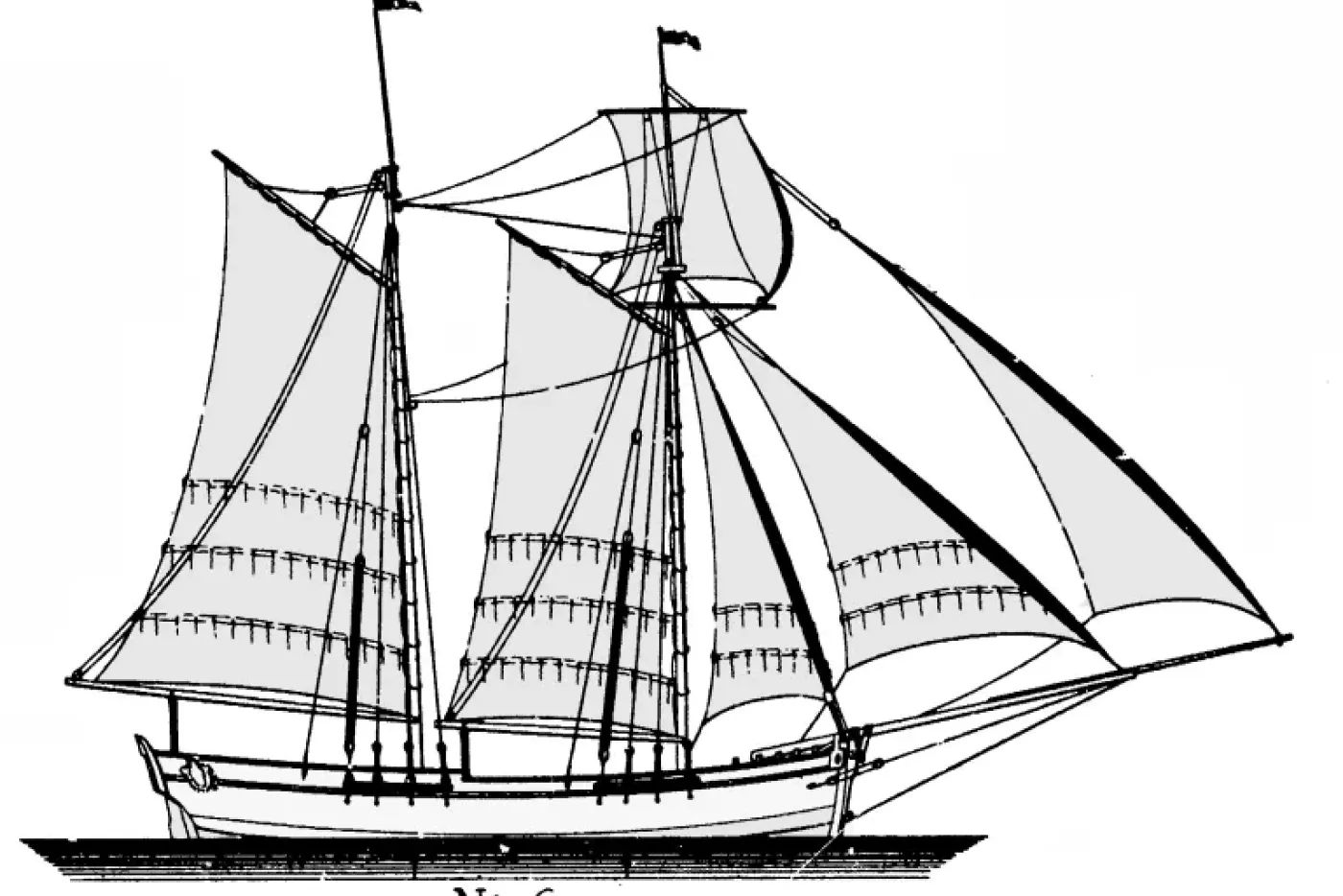
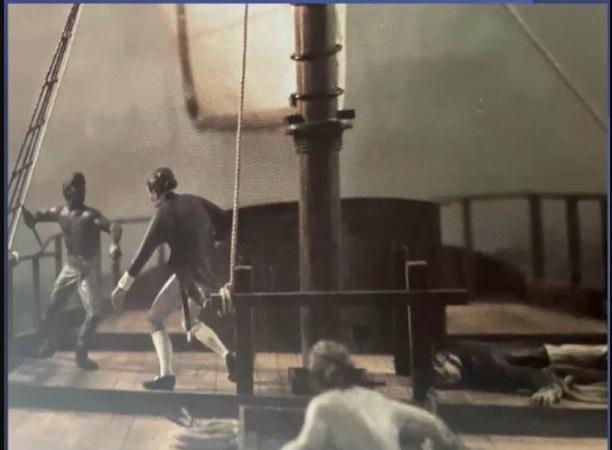
In 1780, the schooner (a ship with multiple masts) named Polly, owned by Henry White of Currituck County, headed out to sea with a crew of three—Henry White’s son Caleb White, Caleb’s brother-in-law Samuel Jasper, and Jack—a man Henry White enslaved. The Polly was soon captured by five British privateers, who chained its crew aboard their own ship. Jack, however, was able to convince his captors that he was loyal to Great Britain and could help them. An account of the conflict by fellow crew member Samuel Jasper stated, “Jack immediately…engaged two of [the British] … having no weapon but a marlin spike … after bloodshed on both sides we conquered them.” Once the British freed him from the chains, Jack assisted his crew mates in fighting to recapture the ship.
The Polly, with its original crew and British captives, then sailed to Annapolis and turned the privateers over to the Continental Congress. According to Samuel Jasper’s account, Jack “received the thanks of the Congress of the United States . . . & a recommendation to his master to liberate him.” Instead, despite his heroism, his loyalty to his crew mates, and the injuries he suffered, he continued to be enslaved by Henry White and was even abused.
Years later, Jack’s former crewmate Samuel Jasper petitioned the General Assembly for his freedom. The case to emancipate John Jasper White, also known as “Currituck Jack,” involved a physical battle during the Revolutionary War and a legal battle afterward to gain freedom. [Read Jasper’s full “account of our engagement at sea,” in the digital collection and in the transcription at the end of this post.] The petition needed to be approved by county courts and then referred to the state in order for an enslaved person to become emancipated. Patriot calls for liberty and freedom during the revolutionary period were at odds with the system of slavery upon which North Carolina’s cash crop economy depended. In fact, an early act of the new state’s General Assembly was to prevent emancipation of enslaved people.
By helping retake his ship from British soldiers, Jasper argued, Jack had fulfilled the 1777 “meritorious services” clause of the North Carolina law that prevented emancipation. After more than a decade of Samuel Jasper’s efforts to emancipate Jack, the North Carolina General Assembly granted the request in 1792 and added the story of his loyalty and heroism to the session records. Upon emancipation, Jack named himself John Jasper White as a way to honor Samuel Jasper’s efforts on his behalf. He was a respected community member and later owned his own ship and married.
Learn more about efforts to memorialize John Jasper White in Jarvisburg, Currituck County, in this one-minute video, “Sculpting History: the Untold Story of Currituck Jack.” Additionally, watch Currituck County historian Barbara Snowden’s program for the Museum of the Albemarle on Currituck Jack here. Snowden has contributed to much of Currituck County’s history, especially on the subject of Currituck Jack. She has served as president of the Currituck County Historical Society and is currently on the North Carolina Historical Commission and North Carolina National Register Advisory committee.
References
- “An Act to prevent domestic Insurrections, and for other Purposes,” Acts of Assembly of the State of North Carolina,” April 1777, p. 17, State publications collection, State Library of N.C., 3 https://digital.ncdcr.gov/Documents/Detail/acts-of-assembly-of-the-stat…;
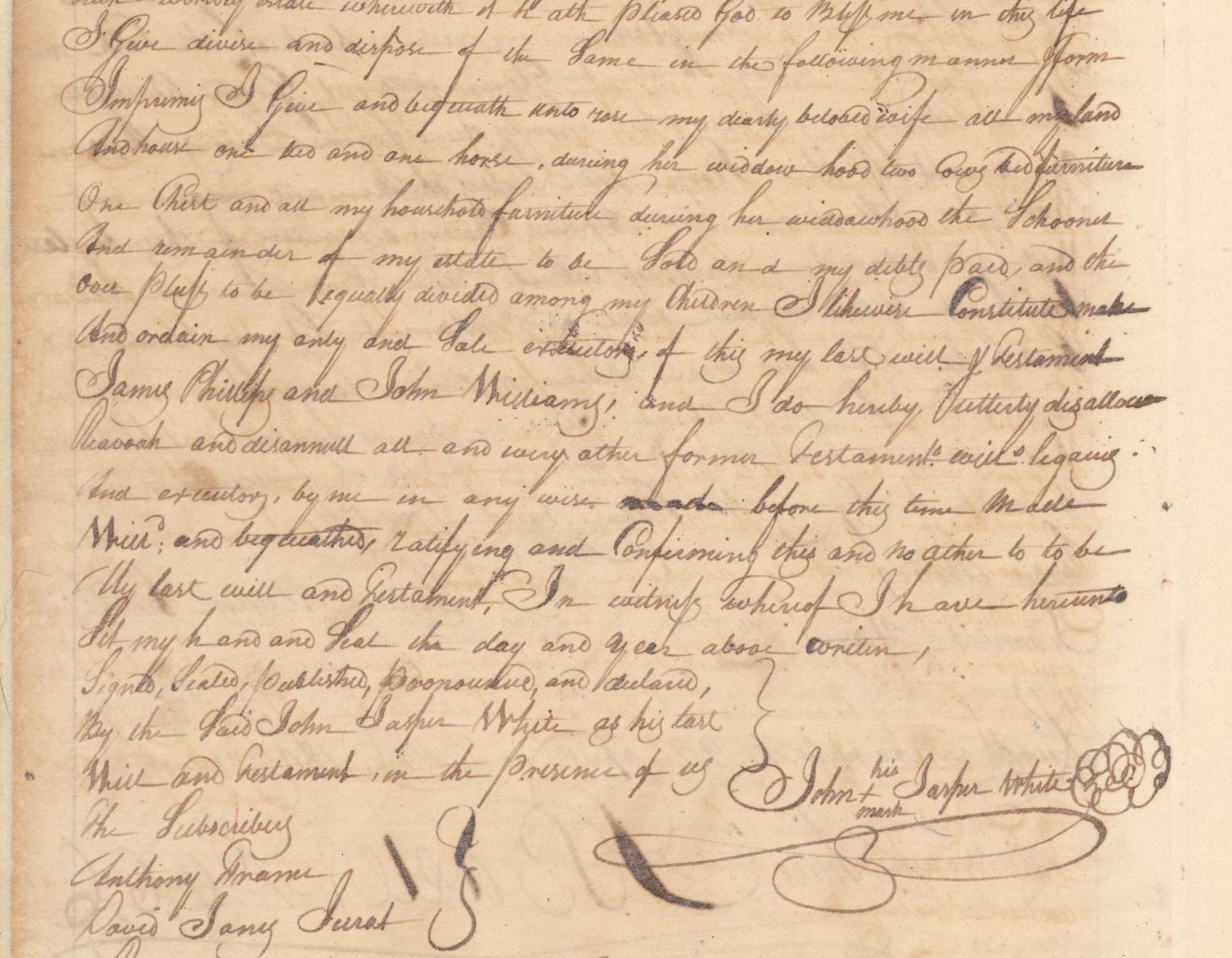
- Currituck County Wills, John Jasper White, 1805, CR.030.801.6, State Archives of N.C.
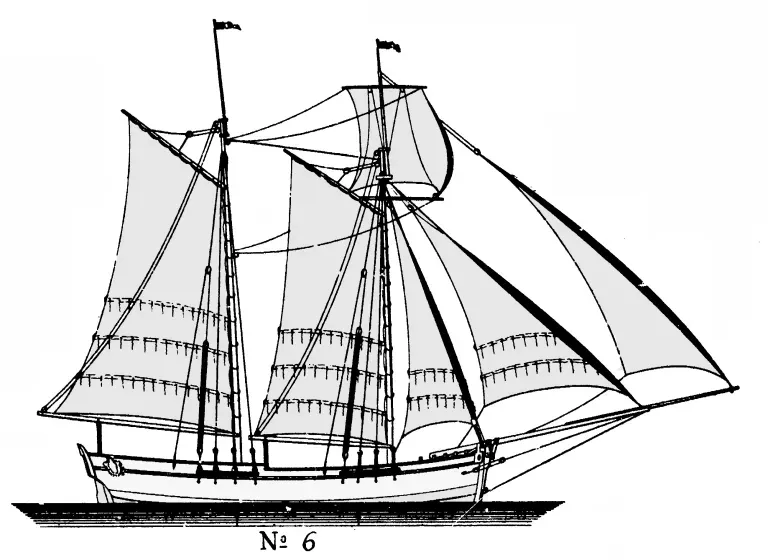
- Example of a 1768 schooner, Frederick Henry de Chapman, A Treatise on Ship-Building (Cambridge [Eng.]: Printed by J. Smith, 1820).
- General Assembly Session Records, November 1792-January 1793: Petitions concerning emancipation, box 3, State Archives of N.C., https://digital.ncdcr.gov/Documents/Detail/session-of-november-1792-jan…, images 6-13.
- The 1800 census lists John Jasper White as head of a household with 3 “negroes.” Second Census of the United States, 1800: Currituck County, North Carolina, Population Schedule, p. 19, National Archives, Washington, D.C. and State Archives of N.C., accessed on ancestrylibrary.com.