
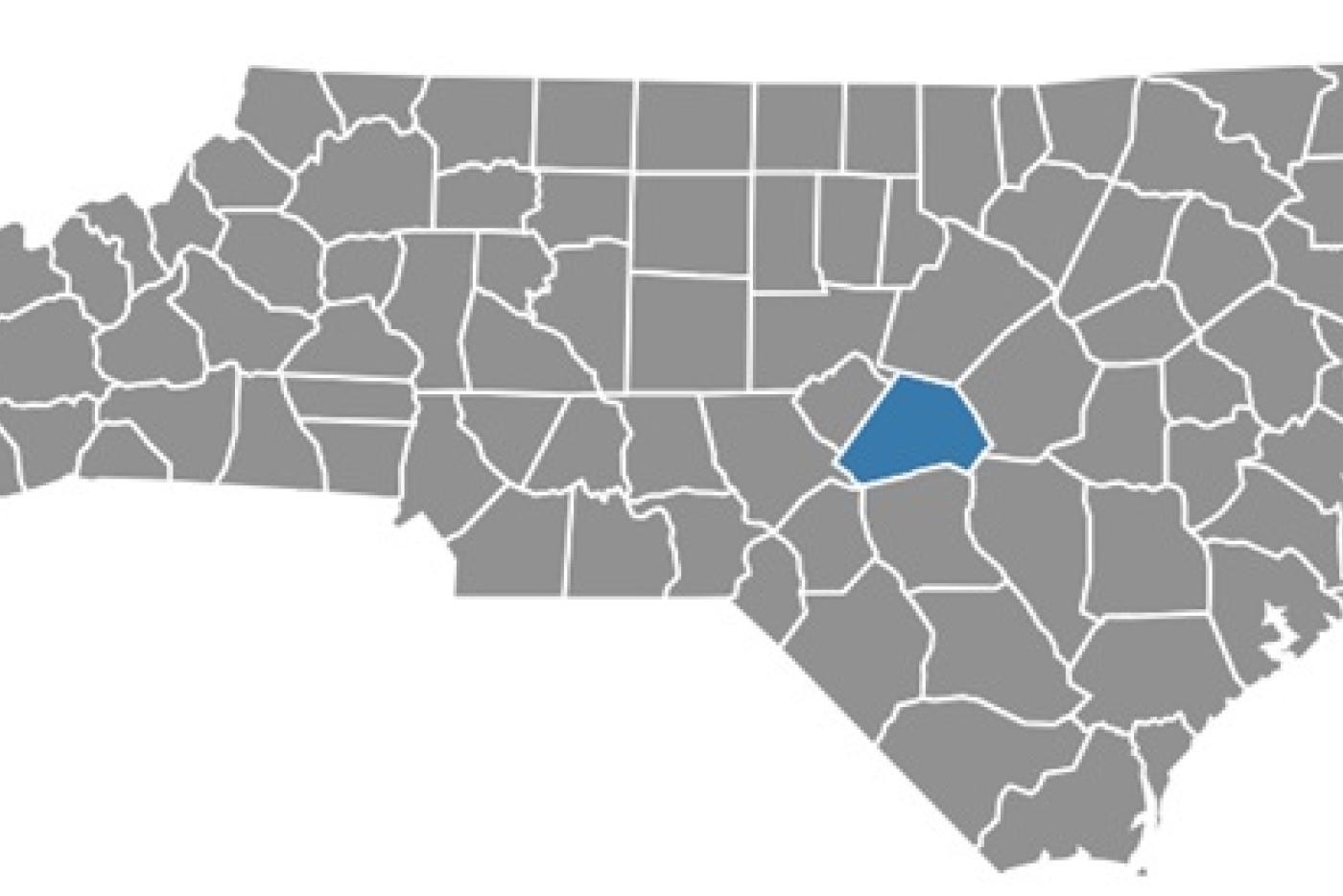
North Carolina formed Harnett County in 1855 out of Cumberland County and named it in honor of the eminent Revolutionary patriot and statesman, Cornelius Harnett. Born in April 1723 in Chowan County, Harnett’s family relocated to Brunswick County when he was still a baby. While his educational background is unknown, as an adult Harnett became a leading figure in the Wilmington community with interests in farming, milling, and mercantile ventures. An avowed Episcopalian, Harnett has also been identified as a Deist, not uncommon for men of his stature at the time. He owned two plantations and lived with his wife at his second plantation, Poplar Grove, in Scotts Hill, just north of Wilmington.
Harnett’s involvement in politics began in 1750 when he was elected to be a town commissioner for Wilmington, and four years later he was elected to the House of Burgesses. By 1765, he was a leading member of the Sons of Liberty and actively protested the Stamp Act, leading some to call him the Samuel Adams of North Carolina. An outspoken patriot, Harnett served as a representative at all five provincial congresses. He chaired the committee that wrote the Halifax Resolves, issued on April 12, 1776, and later was a signatory of the Articles of Confederation. By the late 1770s, Harnett developed significant health issues and following his capture in Wilmington in January 1781 by the British, and imprisonment, he died in April 1781, age 58, just after being paroled.
Located in the central part of the state, Harnett County encompasses 601 square miles and has a population of approximately 146,000 residents. The county seat of Lillington is also named for a Revolutionary figure, Alexander Lillington, one of the patriot commanders at the Battle of Moores Creek Bridge in February 1776. The county is part of the upper Cape Fear region and was originally inhabited by the Coharie people. Many of the first European settlers were Highland Scots who were loyal to the Crown during the Revolution. The county is centrally located between several population centers such as Raleigh, Goldsboro, Fayetteville, and Sanford and is bounded by Wake, Johnston, Sampson, Cumberland, Moore, Lee, and Chatham counties. In addition to the county seat, other incorporated towns in the county are Dunn, Erwin, and Coats, as well as parts of Angier and Fuquay-Varina, and many unincorporated communities. Several major highways and waterways traverse the county. Harnett County is home to Campbell University, located in Buies Creek. Local attractions include Raven Rock State Park, Averasboro Battlefield and Museum, Coats Museum, Dunn Area History Museum, and General William C. Lee Airborne Museum.
#FlatCornelius, based on Cornelius Harnett, has become the America 250 NC Mascot. Make your own and explore the state's history together.