
This article is scheduled to appear in Recall, the magazine of the North Carolina Military Historical Society, and is published here with permission.
North Carolina formed Ashe County from Wilkes County in 1799, naming it in honor of Revolutionary patriot Samuel Ashe. Born in Beaufort in 1725 to a prominent family, with a father and brother who both served in the North Carolina Assembly, Ashe was orphaned at the age of nine. He later studied law and served as the Assistant Attorney for the Crown in Wilmington before joining the cause for independence. Ashe was a lieutenant and paymaster for the First North Carolina Continental Line and later served as captain of the First Troop of North Carolina Continental Dragoons. Serving in the militia and in the provincial congress, Ashe was on the committee that wrote the state’s first constitution in 1776 and was the first speaker of the North Carolina Senate. Ashe became the presiding judge on the North Carolina Superior Court from 1777-1795, when he was elected Governor at the age of seventy. He served three consecutive one-year terms, ending in 1798. Ashe served as a member of the Electoral College in 1804 and was a staunch Democratic-Republican. Ashe died in 1813, at the age of eighty-seven, and is buried on his property at Rocky Point. The cities of Asheville and Asheboro are also named in his honor, and the legendary tennis player Arthur Ashe was a direct descendant of one of the people who Ashe enslaved.
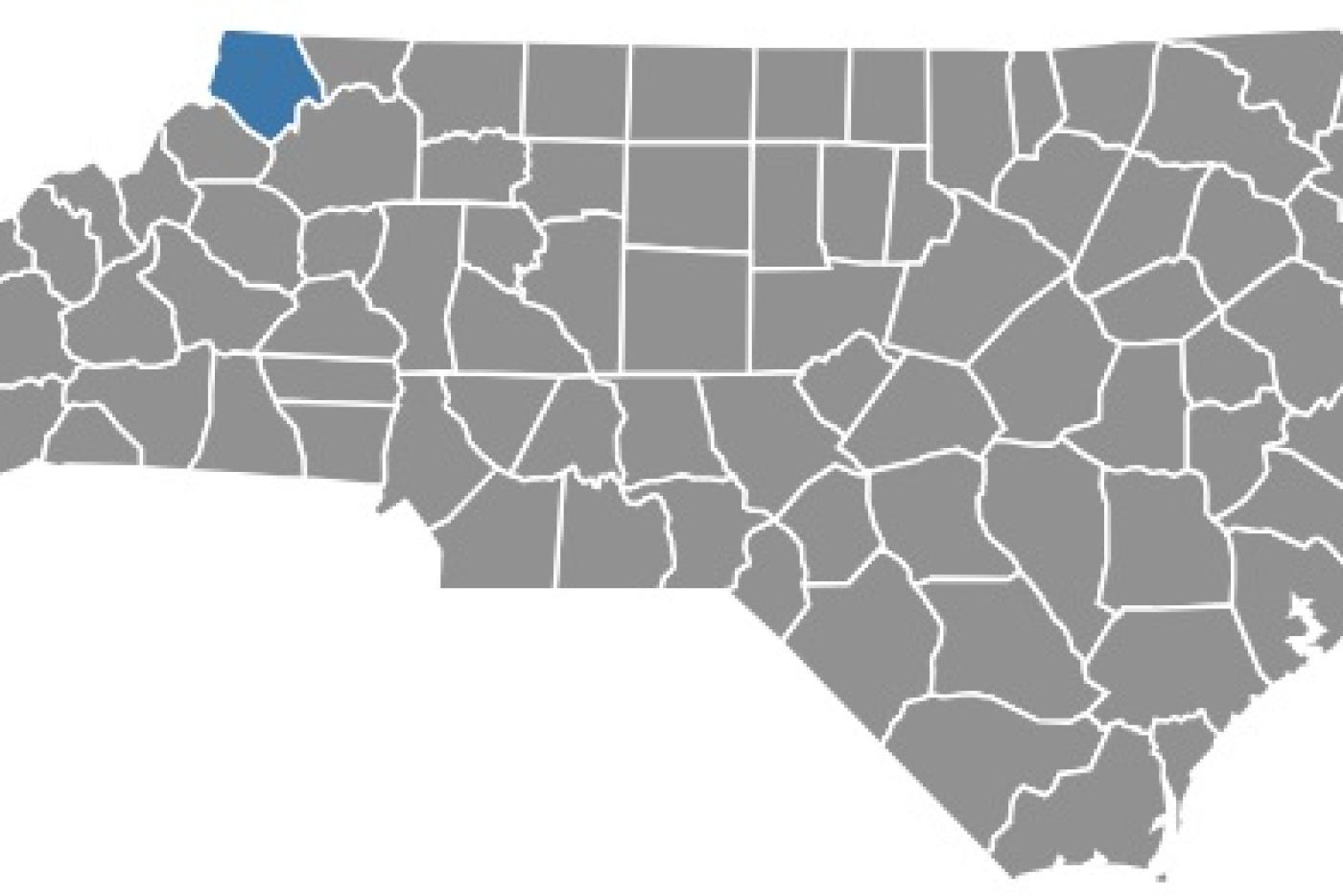
Located in the far northwest corner of the state, Ashe County was originally inhabited by the Cherokee, Creek, and Shawnee tribes prior to the arrival of European settlers, the earliest of whom were Moravians. The county encompasses 429 square miles and has a population of approximately 27,000 residents. The county is mountainous and rural, bordered by Allegheny, Wilkes, and Watauga counties as well as Grayson County, Virginia and Johnson County, Tennessee. The county seat is Jefferson, and two other incorporated towns exist in the county, West Jefferson and Lansing. The county is home to New River State Park, Mount Jefferson State Natural Area, and contains parts of Cherokee National Forest and the Blue Ridge Parkway, making tourism a mainstay of the economy. Other economic activities include cattle and poultry farming and Christmas tree farming.
For more information on the NC Military Historical Society, visit:
https://www.ncmilitaryhistoricalsociety.org/