
North Carolina’s path to independence was forged by individuals who organized protests, led troops, spread information, and built networks of support. North Carolinians never failed to adapt in the face of uncertainty as they imagined a new way of life for their colony. The five Patriots featured below are examples of individuals who were committed to defending their vision of freedom.
Cornelius Harnett: A strong advocate for independence during the Revolutionary War, Harnett rose to political prominence in the 1750’s. He was a leader of the 1765 Stamp Act resistance, helping to form the Sons of Liberty in Wilmington and becoming the first president of the North Carolina Council of Safety [or Provincial Council. As chair of the committee that produced the 1776 Halifax Resolves, he helped make North Carolina the first colony to call for full independence from Britain, contributing to the state’s claim as First in Freedom. He later assisted in drafting the state’s first constitution. He served in the Continental Congress from 1777 to 1780 but was captured during the British occupation of Wilmington in 1781. He died shortly after his release. Harnett County, established in 1855, honors his legacy of leadership and commitment to independence. #FlatCornelius now serves as a mascot for America 250 NC, engaging audiences and encouraging the public to learn more about their state’s diverse history.
Robert Howe: One of North Carolina’s early Revolutionary leaders, Howe first served as an officer in the NC Provincial Regiment in 1761 and commanded Fort Johnston. He was Colonel of Artillery and Quartermaster General in Tryon’s 1771 campaign against the Regulator Movement. Howe helped to form the Wilmington Sons of Liberty, and later the Committees of Safety for Wilmington and Brunswick County. Howe served as a member of the first four Provincial Congresses. At the start of the Revolution, Howe led 500 militia in an attempt to kidnap Royal Governor Josiah Martin. While Martin escaped, Howe’s men burned Fort Johnston’s structures. He was appointed Colonel of the 2nd North Carolina Regiment of the Continental Army and commanded the Virginia and NC troops in the Tidewater of Virginia. He was promoted to Brigadier General in March 1776. He first served as an adjutant in Charleston, and later he commanded the defense of the city when the British tried to take it in June 1776. While his friend, Brigadier General James Moore commanded the entire Southern Department, Howe commanded Charleston and Savanah until Moore’s death in 1777. Howe was appointed to succeed him and was promoted to Major General on October 20, 1777, becoming North Carolina’s highest-ranking officer. In 1779, Howe was ordered to the north, where he served the remainder of the war. Howe returned home in 1783 at the war’s end, intent on resuming his life as a planter. Despite his work for independence for the colony, he owned multiple plantation in North Carolina, where he enslaved numerous Black Americans. In 1786 he was elected to the House of Commons, however, he died on December 14, while traveling to the meeting of the body.
John Chavis: Born to free Black parents in Virginia in 1762 or 1763, little else is known about Chavis’s early life. However, historians know that he was a supporter of Independence in the American Revolution. He enlisted in the 5th Virginia Regiment in December 1778 for three years. He studied theology at what later became known as Princeton, and Washington and Lee Universities. Between 1801 and 1807, he was a circuit preacher to free and enslaved Black people in Maryland, North Carolina, and Virginia. Chavis moved to Raleigh, NC in around 1808 and began preaching to Black and White congregations in Granville, Orange, and Wake Counties. That same year, he opened a school where he taught white and Black children together, until white families complained. After, he taught white children in the daytime, and Black children in the evenings. This continued until Nat Turner’s Rebellion in 1831. Laws were passed banning people of African descent from teaching and preaching. Despite the ban, the Presbytery paid Chavis $50 each month, until he died in 1838. These academic pursuits helped fight against racist rhetoric of the perceived intellectual inferiority of Black Americans.
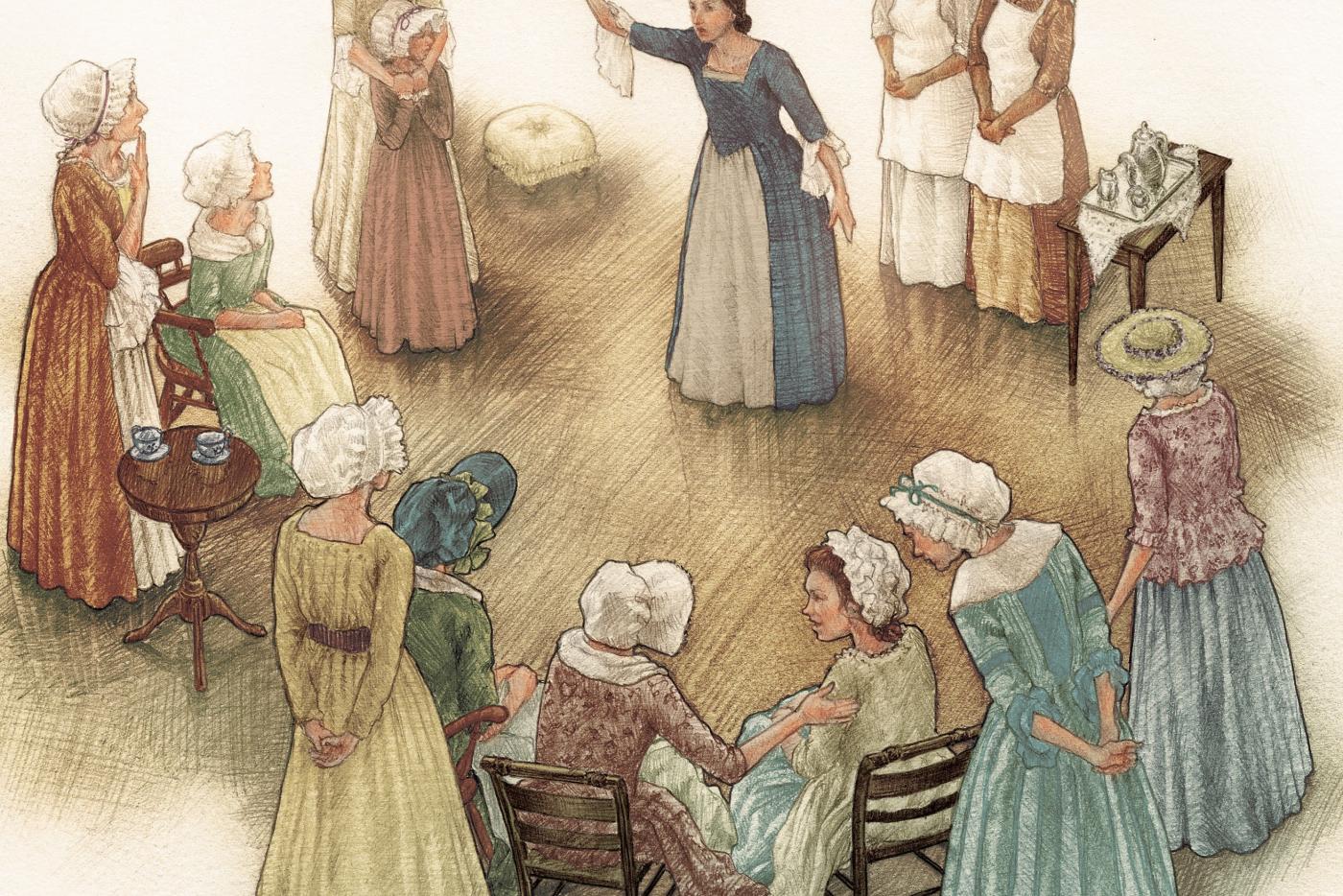
Penelope Barker: An outspoken Patriot, Barker helped organize the Edenton Tea Party, the first documented women’s protest in what would become the United States. Fifty-one local women, including Barker, signed their names to a resolution in October 1774, pledging their support for Independence and announcing their decision to boycott all British goods. It took extreme courage for the women to reveal their own names at a time when they were largely considered second-class citizens. You can read more about Barker and the other women of the Edenton Tea Party in the America 250 NC children’s book, Within Our Power.
Joseph Hewes: One of three North Carolinians to sign the Declaration of Independence (along with William Hooper and John Penn), Hewes was raised in a Quaker household in New Jersey. Hewes apprenticed in a Philadelphia mercantile store beginning in 1749. He moved to Edenton, NC in 1754 and went into business with Charles Blount. He created another business in 1763 called Hewes and Smith. The company flourished and grew to include a store, three warehouses, and five ships. In was in 1774, however, when Hewes, by then a member of Whig leadership, was on the committee who approved a Massachusetts circular proposing that an intercolonial congress be convened in Philadelphia to formalize opposition to "British tyranny." He served on the Committee of Correspondence and the First and Second Continental Congresses, as well as the Congressional Naval Board in 1775 and 1776. Hewes signed the Halifax Resolves on April 12, 1776, helping to lay the groundwork for severing all ties between North Carolina and Great Britain. Hewes was one of three North Carolinians to the Declaration of Independence. Hewes helped draft the state constitution in late 1776 and served in the General Assembly for the next two years. The assembly appointed him once again to the Continental Congress in 1779, but due to rapidly declining health, Hewes resigned while in Philadelphia and died shortly thereafter on November 10, 1779.