
Edward “Ned” Griffin (c. 1765-1802), an enslaved man from Edgecombe County, North Carolina, waged both physical battles during the Revolutionary War and legal battles to gain his freedom afterward. Patriot calls for liberty during the Revolutionary period were at odds with slavery, but the laws of the new state worked to strengthen the system. A 1777 act of the state General Assembly prevented the emancipation of enslaved people. First, a county court had to “adjudge and allow” any request to emancipate, based on what the court perceived to be “meritorious Services,” before the state’s General Assembly would consider the plea, making the pursuit of freedom no easy task.
Ned Griffin joined the Continental Line as a soldier in 1781. His enslaver, William Griffin, had sold him to William Kitchen to take Kitchen’s place after Kitchen had deserted from his 18-month term of military service. Ned enlisted with Kitchen’s promise that if he completed the tour of duty for the 12 months remaining, Ned would be a free man.* After the war, Ned returned to Edgecombe County, but Kitchen betrayed their agreement, capturing Ned and selling him to Abner Robinson of Tarboro.
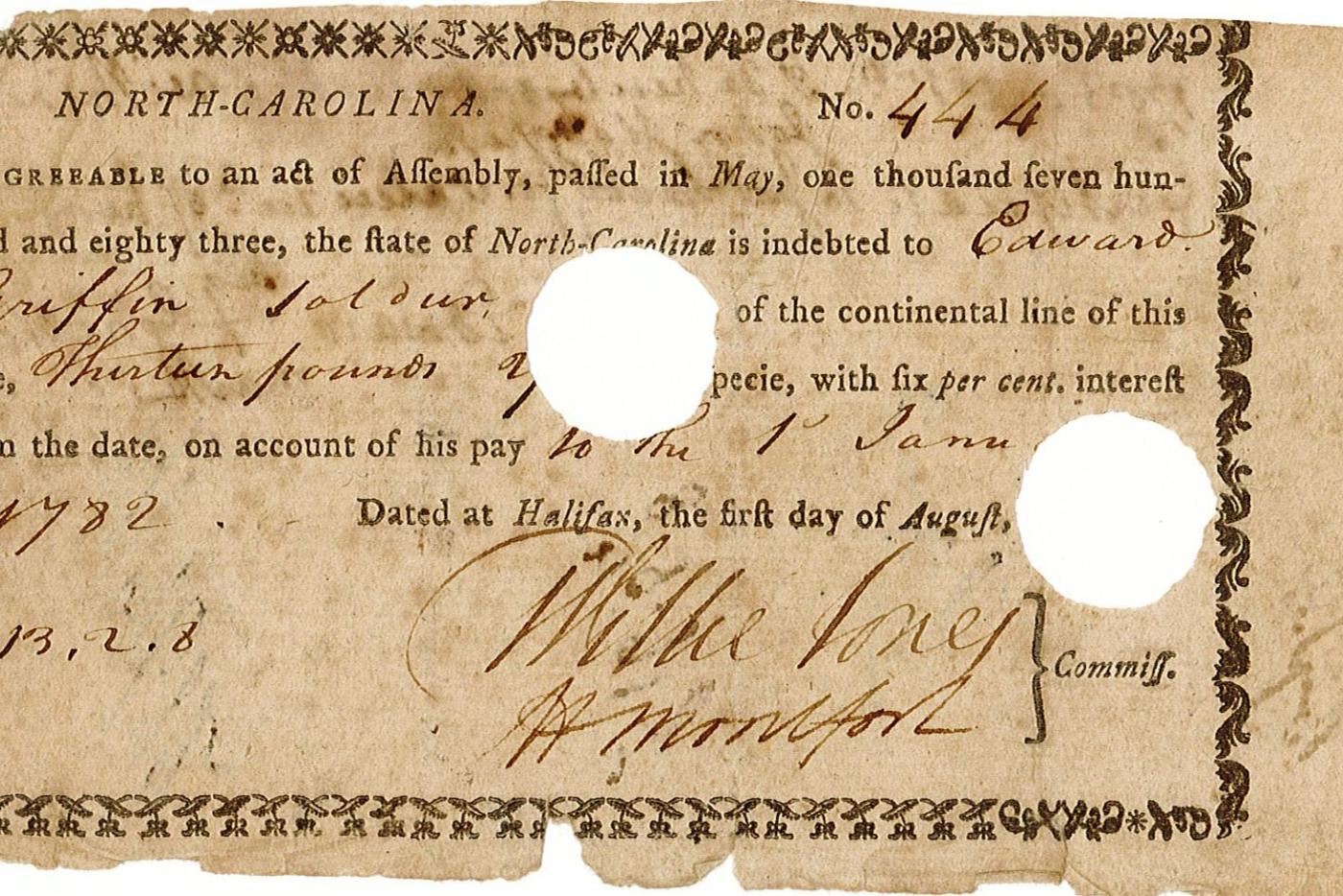
While much about Griffin’s life story remains a mystery, the 1784 petition, along with additional documents in the State Archives, answer some questions and suggest that William Griffin’s negotiation to sell Ned may have been a way to help the young man achieve freedom. Ned Griffin had grown up in William Griffin’s wife’s family. In 1770 John Gosney transferred ownership of Ned, the only enslaved person mentioned in his will, to one of his two married daughters, Oney Griffin.
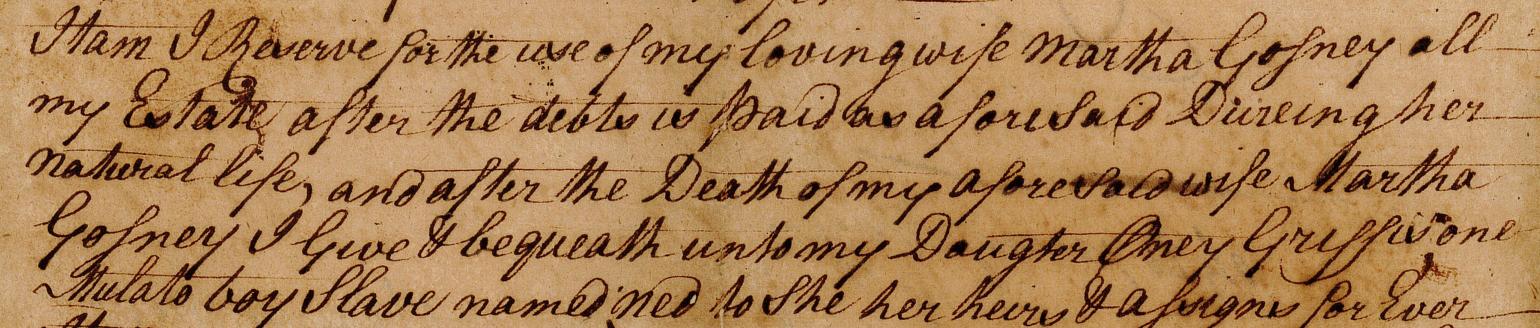
In addition to Ned Griffin’s long (perhaps lifelong) connection to William and Oney Griffin, Ned’s petition itself holds a clue about William’s motivation to make the transaction with Kitchen. “Your Petitioner further saieth that at the Time no Person Could have been hired to have served in said Kitchens Behalf and was so a small sum as what I was purchased for.” Why would William Griffin have sold Ned for such “a small sum”? A young man in good enough physical condition to serve as a soldier would have been valuable for agricultural labor on the Griffin farm. Perhaps William Griffin was in a tight financial bind and exchanging Ned for a pittance made sense, but it is also possible that William Griffin made the transaction at a financial loss to give Ned a fighting chance at freedom, knowing that court acknowledgement of “meritorious Services” was the only legal route to emancipation.
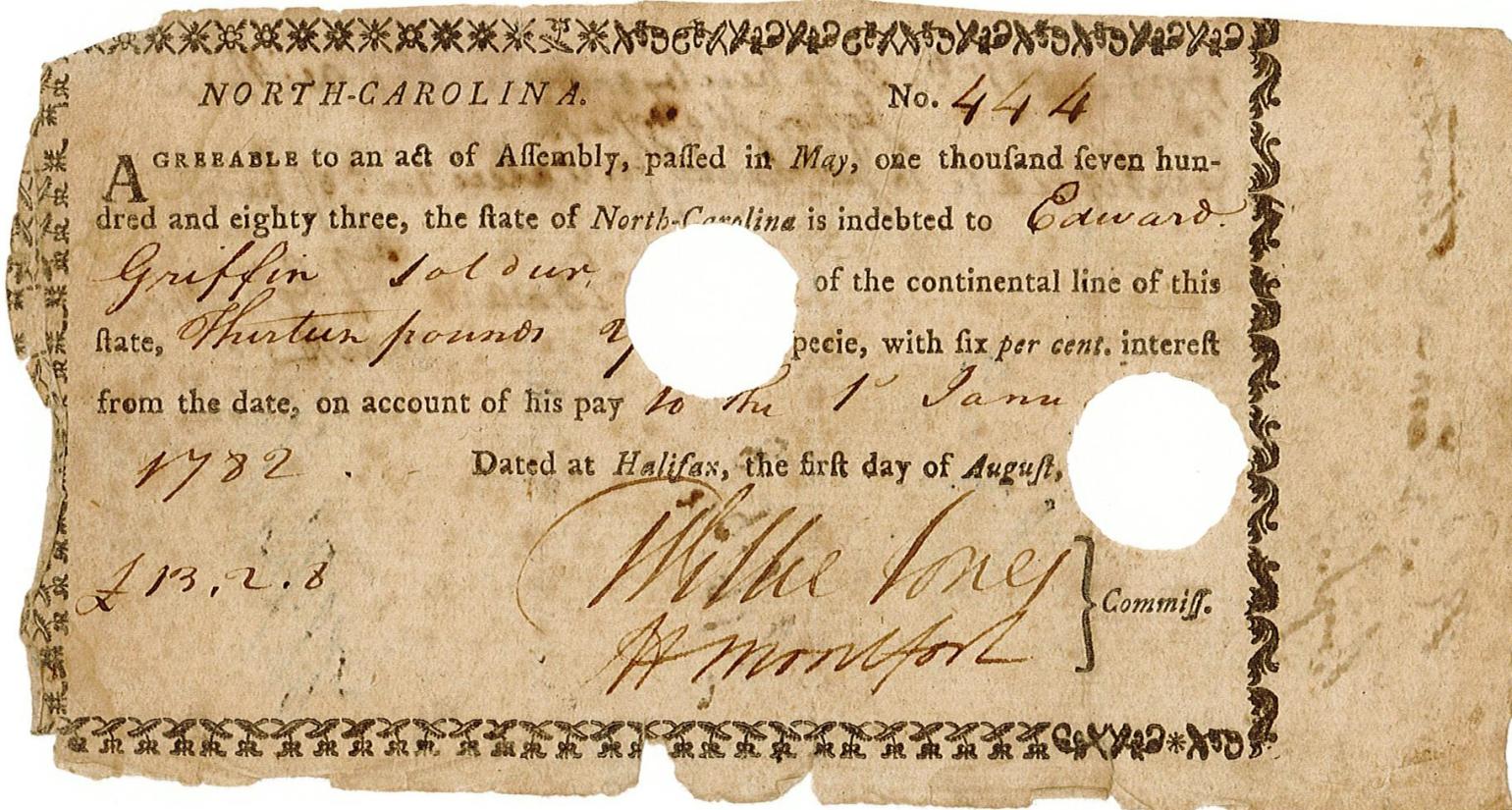
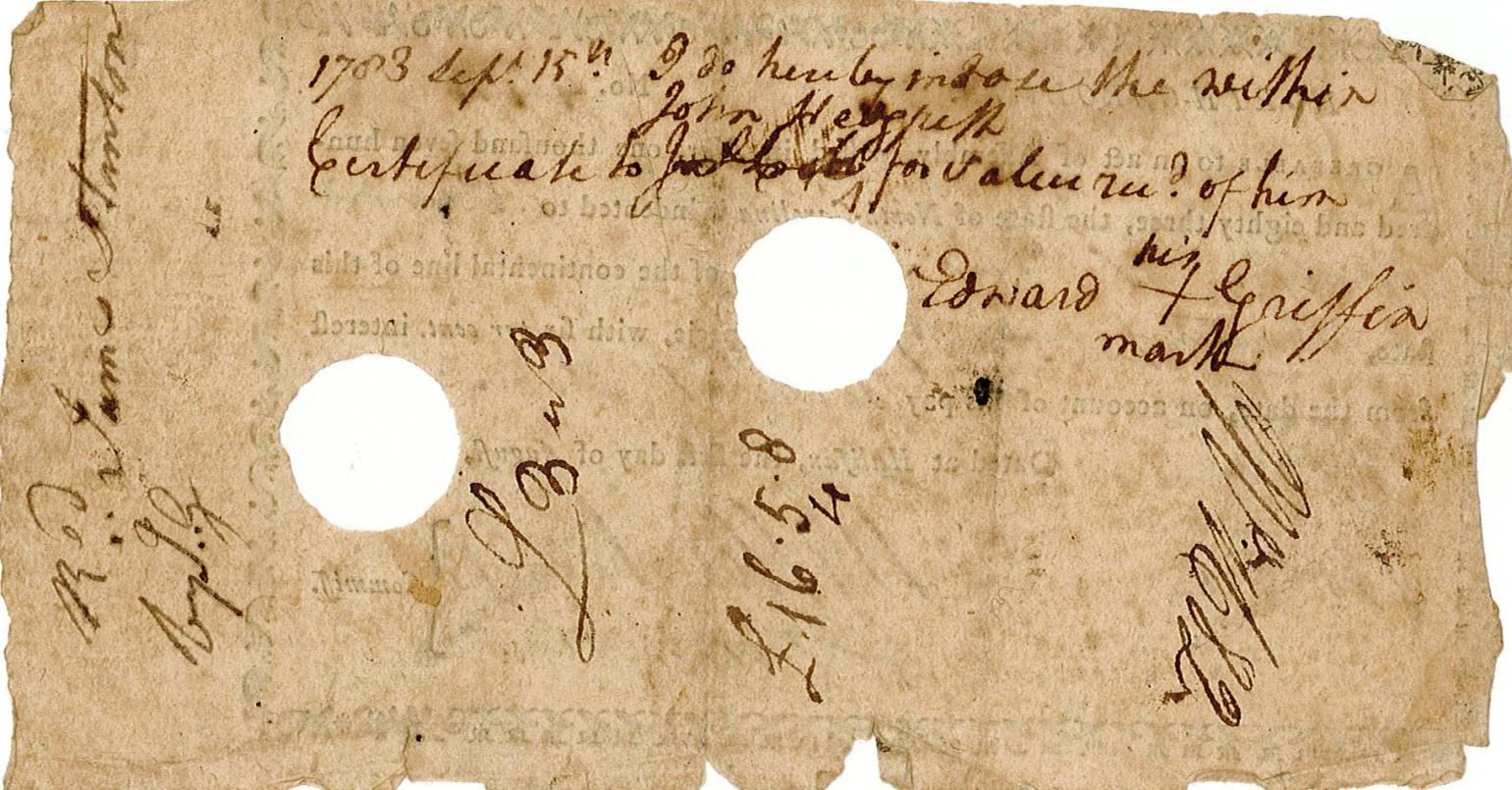
Ned enlisted as a private in the Continental Line in June or July 1781 and served for a year. Soon after he joined, his battalion, led by Captain James Mills, participated in the Battle of Eutaw Springs. On July 1, 1782, he earned a discharge for completing his term at a camp near Bacon’s Bridge in South Carolina. A few months later, he traded his pay voucher to another veteran to collect the cash for “value rec^d.” But more trouble was to come before Ned could enjoy freedom and the fruits of his labor.
References, Part I
- “An Act to prevent domestic Insurrections,” Acts of Assembly of the State of North Carolina (New Bern, NC: J. Davis, April 1777) p. 17
- *Note: state law at the time prevented enslaved men from being substitutes. No “negro slave” may be received as a substitute. Acts of Assembly of the State of North Carolina (January 1781), p. 5. Col. James Armstrong, Ned’s enlisting officer, later testified that he never would have accepted Ned without Kitchen’s promise of freedom. Armstrong, “ever mindful of his duty and determined strictly to adhere the Laws of this state . . . objected to the said Griffin upon this Principle that he was not perfectly satisfied of his being a freeman.” Kitchen convinced Armstrong “that he had Purchased the Service of the said Griffin and upon his Serving the said tour faithfully . . . Kitchen manumitted and totally discharged him from . . . further Services whatsoever. That upon those terms and Solemn assurances of Kitchen only [Armstrong] received and enrolled [sic] him the said Griffin in the Continental service accordingly.”
- Senate bill to give Ned Griffin his freedom, General Assembly Session Records, 1784 April-June, box 3, https://digital.ncdcr.gov/Documents/Detail/may-15-senate-bill-to-give-ned-griffin-his-freedom-petition-and-messages-only/688550
- “The Griffin Family,” Rocky Mount Evening Telegram, January 3, 1958, p. 4, accessed on newspaperarchive.com
- Edgecombe County wills, John Gosney, 1770, CR.37.801, State Archives of N.C.
- Treasurer and Comptroller military papers: Revolutionary War pay vouchers, 1779-1782, Edward Griffin, SR.204.29.50, 1782, State Archives of N.C.