
This article is scheduled to appear in Recall, the magazine of the North Carolina Military Historical Society, and is published here with permission.
North Carolina formed Rutherford County (along with Lincoln County) in 1779, effectively abolishing the former Tryon County, named for previous Royal Governor William Tryon. Griffith Rutherford, one of the most prominent Revolutionary patriots in the state and namesake of the county, served on both the battlefield and in the legislature. Eight years later, in 1787, the county seat was established at Rutherfordton.
Griffith Rutherford, born in 1721 into a Scots-Irish Presbyterian family that originally settled in Pennsylvania, moved to Halifax, NC, to work as a surveyor, and by the early 1750s, was living in Rowan County. He married Elizabeth Graham in 1754, and the couple had ten children. In the 1760s, he served in the Rowan County Militia, where he was commissioned as a Colonel in 1772, and was justice of the peace and sheriff of Rowan County for several years. The Fourth Provincial Congress, held in April 1776, appointed Rutherford Brigadier General of Militia for the Salisbury District, encompassing the entire western frontier of the new state.
Rutherford led an expedition against the British allied Cherokee in western North Carolina in September 1776, in conjunction with South Carolina militia. The expedition destroyed thirty-six Cherokee towns along with crops and storehouses, devastating the Cherokee people. He also worked to counter bands of Loyalists in the region until leadership ordered him to go south to assist in the defense of Savannah, GA and Charleston, SC in late 1778. For the next four years, he continued battling the British, was captured and eventually released, and continued to operate against Loyalists and Cherokees. All these actions enhanced his political clout in the state. Through his political positions, Rutherford continued to suppress and deny rights and property to Loyalists, even after the war, and advocated for heavy taxes on Quakers and Moravians. In the debates over the federal Constitution in the late 1780s, he was a leading opponent of ratification. Holding over 2,000 acres of land in western North Carolina, Rutherford continued his work as a surveyor and land speculator, eventually amassing between 10,000 and 20,000 acres, some in what later became the state of Tennessee. He died in 1805 in Tennessee and has a county named for him in that state as well.
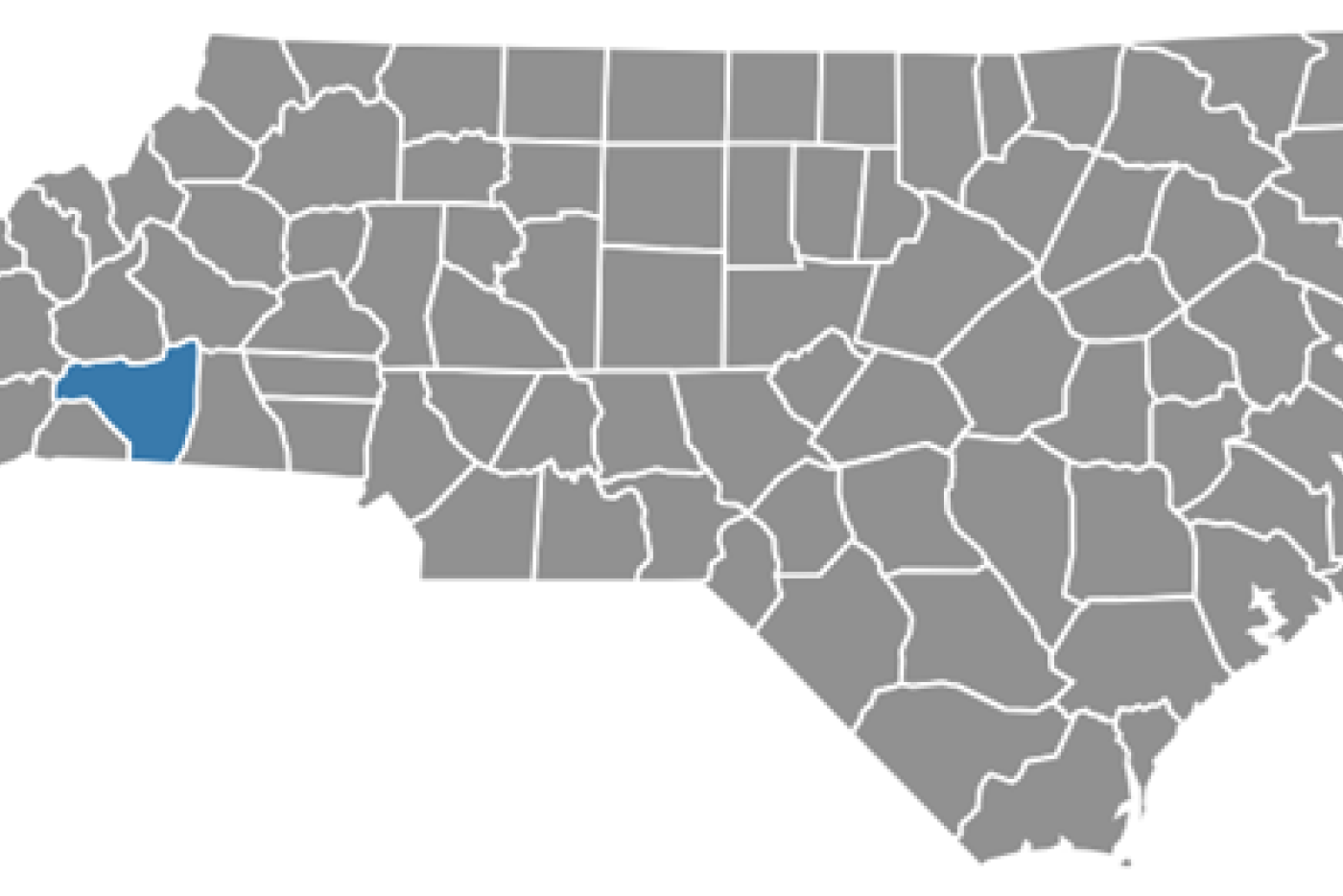
Located in the southwestern part of the state and encompassing approximately 567 square miles, Rutherford County has a population of around 66,000 residents. Bordering counties include McDowell, Burke, Cleveland, Henderson, Polk, and Buncombe in North Carolina, as well as Cherokee and Spartanburg counties in South Carolina. The county’s economy centers around tourism, particularly in the areas of Lake Lure and Chimney Rock, agriculture, timber, and textiles. The county is also home to a Facebook data center and a diversified metals production facility. Chimney Rock and Lake Lure have provided settings for several well-known films, including Firestarter, Dirty Dancing, and Last of the Mohicans. Both Chimney Rock State Park and South Mountains State Park lie partially within Rutherford County.
For more information on the NC Military Historical Society, visit: https://www.ncmilitaryhistoricalsociety.org