
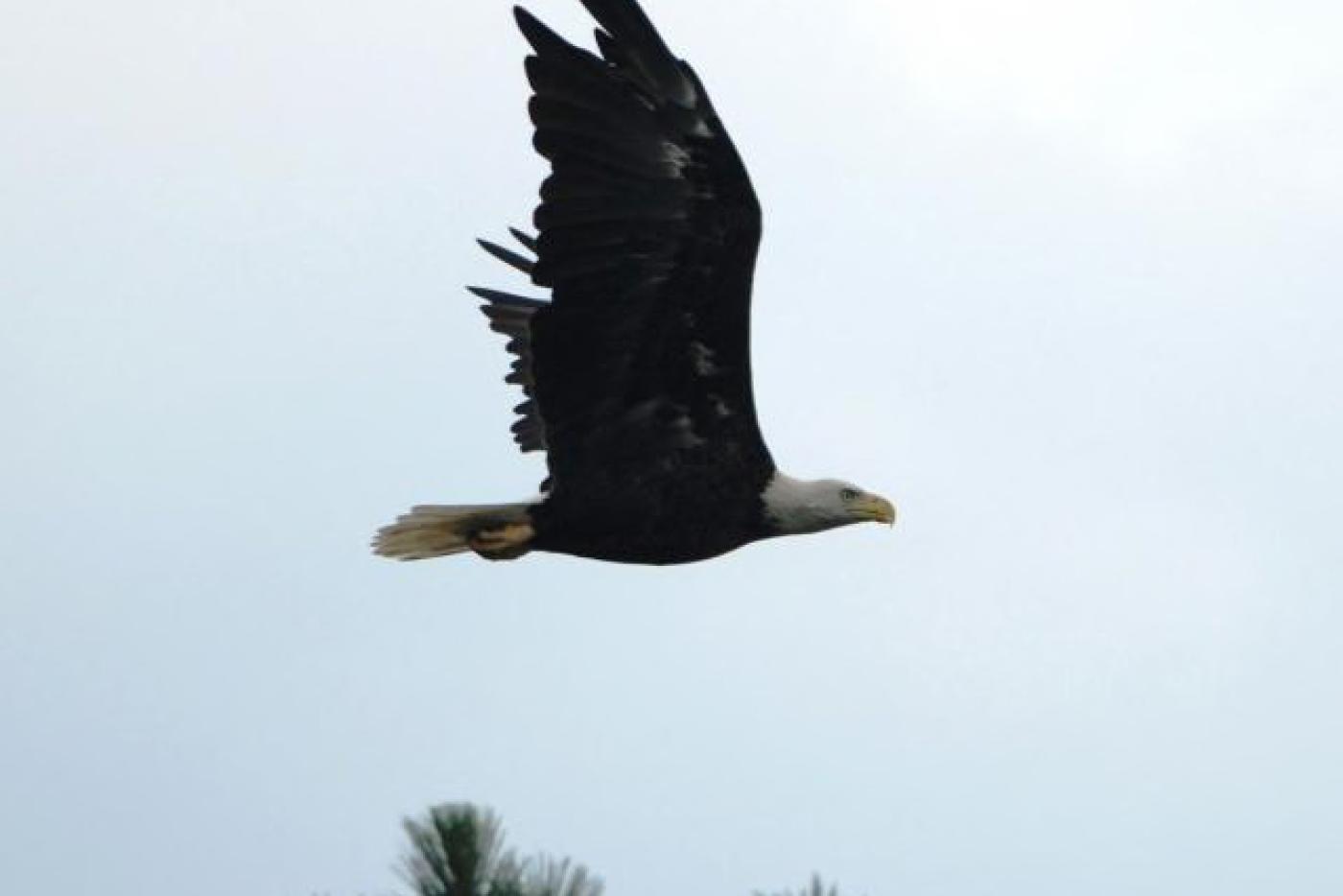
North Carolina State Parks is marking America 250 by highlighting powerful symbols of our nation’s history and resilience. One of these symbols, perhaps most-often recognized, is the bald eagle. Bald eagles can be found in a number of state parks across North Carolina, serving as a living reminder of the country’s natural heritage and conservation success. Join us in celebrating this historic anniversary of the signing of the Declaration of Independence with our nation's most iconic symbol: the bald eagle. Visit one of the state parks below to catch a glimpse of these magnificent creatures!
Over 250 bird species have been recorded at Carolina Beach State Park, including bald eagles. While eagles can be seen year-round, your best chance is in the fall and winter during nesting and migration. They are often spotted soaring over the Cape Fear River as they hunt for fish. In spring and summer, ospreys — another impressive fishing bird — are commonly observed. Ospreys have a distinctive white head with a dark eye stripe, while adult bald eagles are easily recognized by their fully white heads.
While bald eagles are not commonly seen at Chimney Rock State Park, they are occasionally spotted during the fall migration season alongside other birds of prey. The park’s dramatic cliffs and rugged terrain also attract peregrine falcons and common ravens, both of which thrive in the steep landscapes of the Hickory Nut Gorge. In spring, the park comes alive with color and song as warblers, indigo buntings, scarlet tanagers, and brown creepers migrate through the area.
Falls Lake State Recreation Area is home to about 14 bald eagles year-round, with additional eagles passing through during the winter months. Adult bald eagles are easily recognized by their iconic white heads and tails, while juveniles display mottled brown and black plumage. One way to identify a bald eagle in flight is by its straight-winged silhouette — unlike some birds of prey, its wings do not form a “V” shape where they meet the body.
At Fort Macon State Park, the best time to see a bald eagle is in winter; however, they can be spotted year-round. Fort Macon is a haven for birdwatchers. Herons and egrets roost in the cedar trees surrounding the fort, while warblers, sparrows, and other migrating birds — including the painted bunting — can be found in the nearby thickets. Look for sanderlings and dunlins on the beach in late summer, and rare visitors like purple sandpipers and common eiders along the jetties in winter.
Goose Creek State Park’s brackish marshes, cypress swamps, and Pamlico River shoreline provide ideal habitats for bald eagles, which prefer wetland-rich areas near open water and tall, mature trees. Eagles are most commonly seen along the Flatty Creek Trail and Mallard Creek Trail pier, as well as along the Pamlico River and Goose Creek shoreline. These areas offer the perfect combination of habitat and visibility for these majestic raptors. Winter is the best time to see bald eagles, as migrating birds from the north join the local population, increasing your chances of sightings.
At Gorges State Park, visitors may occasionally spot bald eagles soaring high above the Blue Ridge Escarpment. They are often seen traveling between nearby water sources — Lake Jocassee to the south and Lake Toxaway to the northeast. Bald eagles are skilled anglers, feeding primarily on fish. Other large raptors that can be seen hunting or soaring in the park include black and turkey vultures, as well as red-tailed, red-shouldered, sharp-shinned, and Cooper’s hawks.
At Hanging Rock State Park, you may be able to see bald eagles soaring around peaks, over fields, or near bodies of water. Another more common but equally impressive sight around the park is the turkey vulture, easily recognizable by its featherless red head, blackish-brown body, and silver wing undersides. While bald eagles hunt with their sharp eyesight, turkey vultures use their incredible sense of smell to locate food over a mile away. Both birds soar on rising thermals to gain altitude and fly long distances without flapping their wings, which helps them conserve energy.
Bald eagle sightings at Haw River State Park are rare, with only four reported in the park. More commonly, visitors may see great blue herons fishing along the water, red-tailed hawks soaring overhead, or pileated woodpeckers moving through the forest. With its mix of wetlands, woodlands, and open fields, the park offers excellent opportunities for birdwatching.
Over 400 bird species can be observed along the Outer Banks, many of them right here at Jockey’s Ridge. Coastal birds, songbirds, and migratory waterfowl make the park their home year-round or seasonally. During migration periods, birds of prey can often be seen following the dunes. One of the park’s most remarkable residents is the peregrine falcon — the world’s fastest animal!
Jones Lake’s tea-colored, acidic water supports few fish species. Because bald eagles depend on fish — especially during nesting season — they rarely hunt around the area. While bald eagles are less common here, many other bird species thrive in the park. The rare red-cockaded woodpecker nests in the longleaf pine forest, and prothonotary warblers can often be seen along the lake’s edge. In winter, migrating waterfowl pause here to feed and rest along their journey south.
Bald eagles are a common sight at Jordan Lake, making it a favorite destination for birdwatchers and eagle enthusiasts. In summer, the park hosts the largest concentration of bald eagles east of the Mississippi River. During winter, around 26–28 nesting pairs make their homes here and raise their young. While adults are easy to spot with their distinctive white heads and tails, visitors may also see juvenile eagles — mottled brown and white — soaring over the lake as they practice their fishing skills.
Kerr Lake offers outstanding opportunities for birdwatching year-round. Bald eagles and ospreys are often seen gliding above the lake in search of fish. In winter, the lake becomes a haven for migrating waterfowl, including ducks, mergansers, and loons. Throughout the park, visitors can also spot songbirds in the trees and wild turkeys strutting through open fields and forests.
Bald eagles are frequently seen soaring over the Catawba River access area. The many mature trees here provide ideal nesting sites, making sightings more common. Bald eagles use this area to establish and defend territory, find mates, build nests, and raise their young. From high above, they scan the water for fish — they are able to spot their prey from a mile away and dive with remarkable accuracy. This area is also excellent for observing ospreys, another large bird of prey, which often build nests on the light poles along the dam.
At Lake Norman State Park, Park Lake is a prime spot for viewing wading birds and raptors. Bald eagles are occasionally seen soaring overhead, while great blue herons, snowy egrets, and ospreys are frequent visitors along the shoreline.
At Mayo River State Park, bald eagles have been spotted in multiple areas and are known to nest nearby. The best times to observe them are during the quiet hours of early morning and evening, particularly from river overlooks. Other birds of prey are also commonly seen along the Mayo River, including the striking, yellow-crowned night heron.
Morrow Mountain State Park is one of the premier birdwatching destinations in the Uwharrie Mountains. Its wide range of elevations and habitats supports a diverse array of bird species throughout the year. Spring and fall migrations are especially productive, thanks to the park’s abundant water sources. Bald eagles are attracted to the area due to the construction of several lakes that began in the early 20th century. Eagles are opportunistic scavengers and often pluck stunned fish from beneath the dams. The rugged Uwharrie terrain also provides ideal perches and potential nesting sites.
While bald eagles occasionally migrate past Mount Mitchell State Park, the lack of large bodies of water makes the area unsuitable for them as long-term residents. Instead, keep an eye out for two fascinating members of the corvid family — the American crow and the common raven. Though similar in appearance, ravens are much larger and are typically found only in western North Carolina, while crows are common statewide. If ravens aren’t a regular sight where you live, take advantage of your visit to Mount Mitchell to watch these remarkably intelligent birds as they explore and interact with their surroundings.
Depending on the season, visitors can spot nearly 60 bird species in the field and surrounding forest edge. This native grass field provides important food and habitat for both local and migratory birds. Carolina wrens, eastern bluebirds, American goldfinches, field sparrows, and eastern phoebes are commonly seen here. Migratory species like the indigo bunting, with its vibrant blue plumage, and the bright yellow warbler can also be spotted during their seasonal visits.Dead trees along the forest edge and within the field attract pileated woodpeckers — the largest woodpecker species in North Carolina. Above, bald eagles may soar toward the river, while red-tailed hawks hunt for hidden prey in the tall grasses. At dusk, the barred owl’s haunting call or the deep hoot of the great horned owl can be heard.
At Raven Rock State Park, bald eagles can be seen flying low along the Cape Fear River during the winter months as they hunt for fish, search for mates, and scout potential nesting trees. Birdwatchers can look for warblers and other songbirds along the mountain laurel-covered banks of Little Creek, and spot soaring birds of prey and waterfowl from the overlook. Along the Little Creek Loop Trail, wild turkeys, barred owls, and migrating warblers are often seen. The Fish Traps and Northington Ferry trails both descend to the Cape Fear River, where spotted sandpipers can frequently be observed feeding along the rocks during migration. The longest and most challenging trail, the Campbell Creek Loop Trail, is less commonly used for
birding but offers opportunities to see belted kingfishers, whose nesting tunnels can be observed in the creek banks.
Eagles, ospreys, and herons are among the most commonly seen birds near Carolina bay lakes throughout the year. At Singletary Lake, these species are most active in the morning and late afternoon. Juvenile bald eagles have been observed soaring above the lake in recent months, suggesting a nearby nest. While eagles and ospreys are often spotted from the pier, herons and other wading birds are frequently seen at the spillway at the end of the park road. Predatory birds are also occasionally observed along Highway 53, likely hunting between the Cape Fear River and Singletary Lake. In winter, flocks of migrating ducks visit the lake, and songbirds provide melodies throughout the park year-round.
Learn more bird-watching tips and discover specific areas for viewing in each park at America 250: The Bald Eagle.