
This article is scheduled to appear in Recall, the magazine of the North Carolina Military Historical Society, and is published here with permission.
North Carolina formed Polk County from land from Rutherford and Henderson counties in 1855 to honor Colonel William Polk who, distinguished himself through military service at the battles of Brandywine, Germantown, and Eutaw Springs. Born in Mecklenburg County in 1758, William’s father, Thomas, served as a militia commander and later Colonel of the 4th North Carolina Regiment of the Continental Line. At the outbreak of the American Revolution, William left his studies at Queens College behind. He joined his uncle’s company of the 3rd South Carolina Regiment as a Second Lieutenant, until December 1775, when he suffered a severe wound to his left shoulder.
The North Carolina Provincial Congress appointed Polk major of the 9th North Carolina Regiment in November 1776, and the unit eventually joined George Washington’s army at Trenton, New Jersey. During the 1777 campaign in Pennsylvania, Polk fought at the Battle of Brandywine in September, then at the Battle of Germantown in October, where he was shot in the mouth. He recovered from his wound while with the Continental Army during the infamous winter at Valley Forge. Removed from active service in March 1778, Polk spent the next two years at home in North Carolina on recruiting duty. In 1780, Polk became an aide to General Richard Caswell and participated in the disastrous Battle of Camden, after which he served under a series of commanders, including General William Davidson and General Daniel Morgan. In 1781, following the Battle of Guilford Courthouse, Polk again entered the service. In South Carolina on September 8, 1781, he fought in the Battle of Eutaw Springs, the last major engagement of the war in the South.
Following the American Revolution, Polk served in the North Carolina House of Commons and Council of State. George Washington appointed Polk Supervisor of Internal Revenue for the District of North Carolina, a position in which he served from 1791-1808. Polk moved to Raleigh in 1799 following the death of his first wife. He served as Grand Master of Masons in North Carolina and helped found the North Carolina Society of the Cincinnati. In 1811, Polk became the first president of the State Bank of North Carolina and held the position until 1819. He ran twice as the Federalist nominee for Governor but lost both races. At the onset of the War of 1812, he declined a commission as Brigadier General from President James Madison. He was also very active in the North Carolina auxiliary of the American Colonization Society, an organization that aimed to resettle free African Americans in Liberia. Polk died in Raleigh in January 1834.
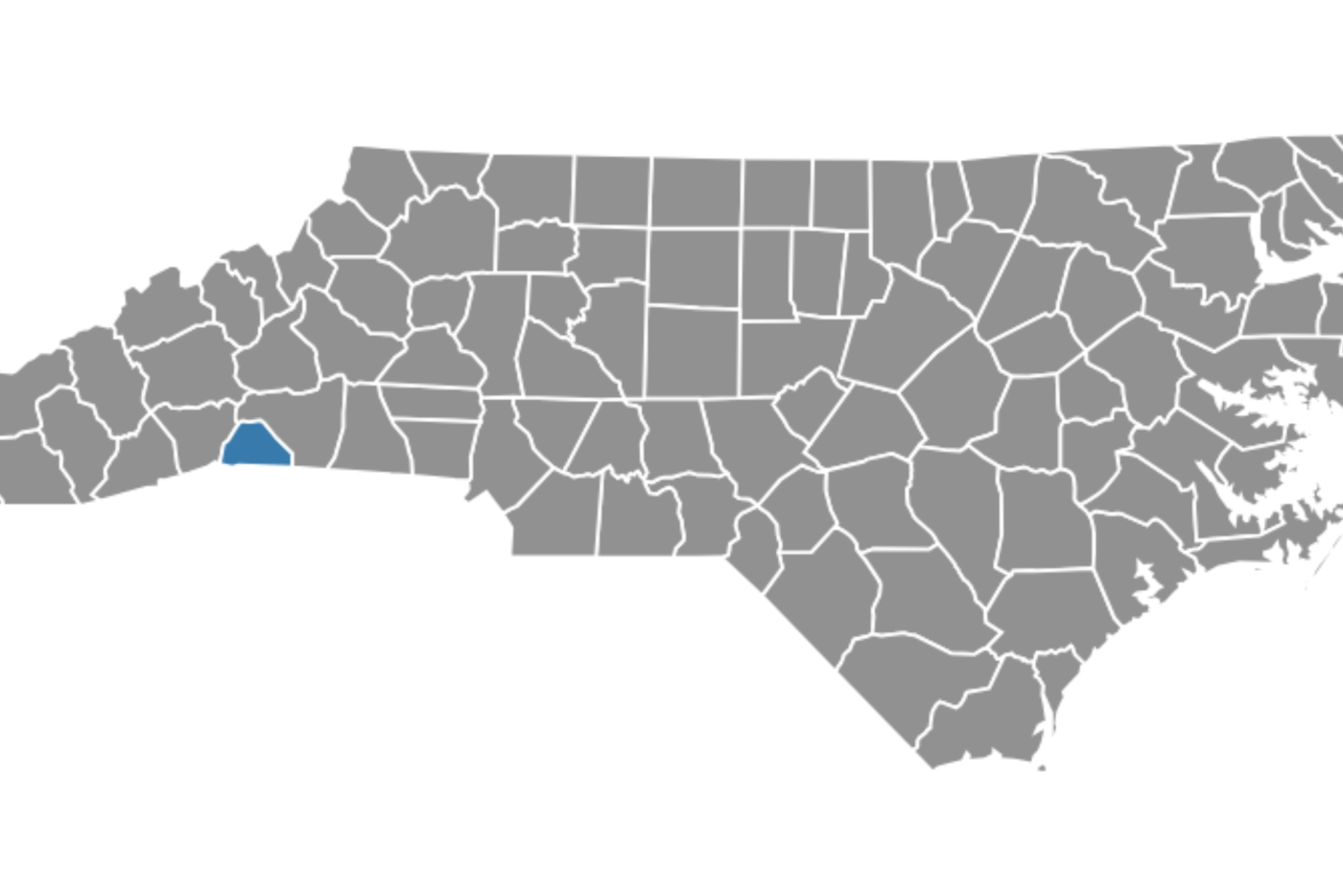
Located in southwestern North Carolina, straddling the Piedmont and the Blue Ridge Mountains, Polk County encompasses just under 240 square miles, with a population of approximately 20,000 residents. Bordering counties are Rutherford and Henderson (N.C.) and Spartanburg and Greenville (S.C.). Running through the county, Interstate 26 provides easy access to both Asheville, N.C., and Spartanburg, S.C. Columbus is the county seat, while Tryon is the largest municipality in the county. Economically, the county relies heavily on agriculture and tourism, particularly outdoor recreational activities.
For more information on the North Carolina Military Historical Society, visit: https://www.ncmilitaryhistoricalsociety.org/